Trump’s Iran Ceasefire Was Built to Fail
As a result, we may be in for a prolonged period of uncertainty that looks neither like peace nor war.
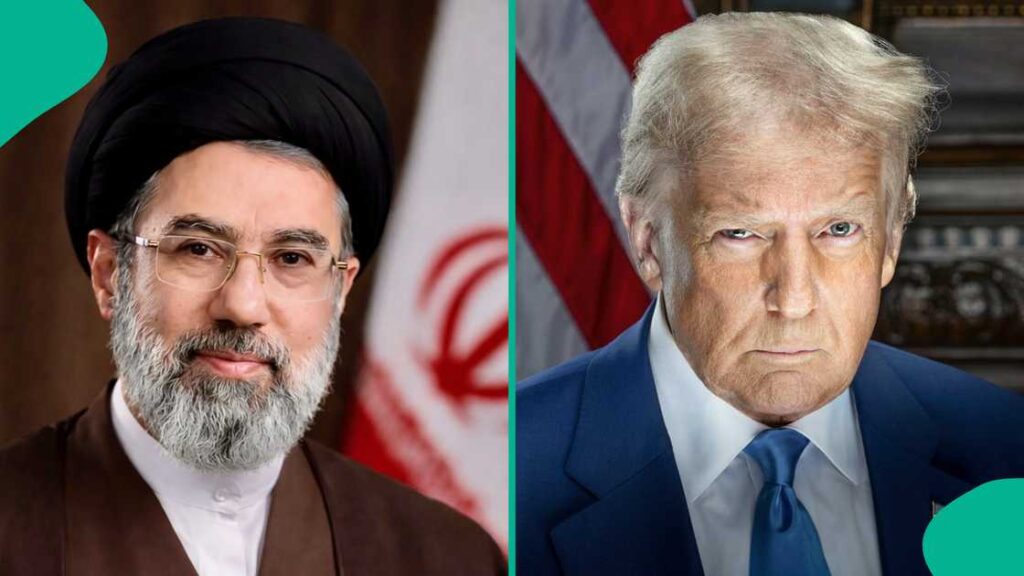
Donald Trump says Iran’s leaders are “vicious,” “evil,” lying “scum.” Perhaps they are, but that is not the root cause of his predicament in the Strait of Hormuz, where the US president now says the ceasefire is over and further diplomacy would be a waste of time. His troubles — and therefore those of America’s Gulf allies and the global economy writ large — stem from his own falsehoods.
The war Trump launched against Iran on Feb. 28 didn’t end in the victory he has claimed. Nor did the ceasefire terms he agreed in an attempt to end it — set out in a so-called Memorandum of Understanding — represent Iran’s “unconditional surrender.” They were anything but. The document’s language is so ambiguous it has allowed both sides to continue pursuing their war aims by other means.
This was an improvement over the devastation of war and the risk, cited by Trump himself, of tipping the world into recession. Nonetheless, it created an inherently unstable situation, because it was only a question of time before that ambiguity meant the two sides would start accusing each other of breaking the ceasefire terms. Those perceived breaches began within days and produced periodic exchanges of fire. But until Wednesday, neither side had wanted to declare the truce and negotiations over, because the alternative was so unappealing.
This being Trump, it isn’t clear even now whether that moment has been reached. He left the door open for negotiations to continue, which would require the ceasefire to go on in some form, too. If that happens it’s because none of the circumstances that produced that MOU’s vague language have changed. Those include the failure of a months-long, US-Israeli air campaign to achieve either its original goals or the new one it created: restoring the Strait of Hormuz to its free, pre-war status.
Yes, the US and Israel together managed to kill Supreme Leader Ayatollah Ali Khamenei and some of his top aides, sink Iran’s conventional navy and deplete its missile stocks. But instead of collapsing, the regime has consolidated around new leadership. Its military remains capable of striking back at US bases and allies across the Gulf. Its drones, mines and small boats can still threaten oil and gas tankers.
The new leaders in Tehran have staked their future deterrence strategy on the ability to control the Strait of Hormuz. Speaking on Iranian TV this week, an adviser to Iran’s chief negotiator Mohammad Bagher Ghalibaf spelled this out. He said that turning the strait into a revenue stream was less important than retaining control over it, which the regime will either achieve, “or every single one of us become martyrs for it.”
The Iranians say the MOU Ghalibaf negotiated with US Vice President JD Vance gives them the right to organize the flow of traffic through Hormuz. Article five of the 14-point document instructs Iran to “make arrangements using its best efforts for the safe passage of commercial vessels.” The only stipulation about what those arrangements should look like is that no fee should be charged for the 60-day duration of the MOU’s terms.
The same clause goes on to say Iran should work out the strait’s longer-term management with Oman, which sits on its other shore. The US and its Arab Gulf allies interpret this language as requiring free and unfettered passage on Oman’s side of the strait. Iran says the deal gives it the right to manage traffic through the strait as a whole. Neither is lying. The lie was claiming there was agreement in the first place.
A solution to the Hormuz issue remains elusive. Neither the Gulf states nor their trading partners can afford to let Iran exercise control of shipping lanes. One can imagine a new treaty or informal agreement similar to the 1936 Montreux Convention that granted Turkey well-defined rights over the set of straits that join the Black Sea and Mediterranean. But not one that grants the kind of control that produces the geopolitical leverage Iran now seeks.
The MOU provided an opportunity for the US and Iran to test their respective abilities to force their will in the strait, but the test has so far proved inconclusive. The US was increasing tanker flows through the channels on Oman’s side of Hormuz, in part by turning off their transponders. Iran’s Islamic Revolutionary Guard Corps was able to hit some of those tankers, making a long-term return to pre-war levels of throughput unlikely without a further deal.
There’s no doubt that the Pentagon has military options available for trying to break this stalemate. These reportedly were shown to Trump already, only for him to reject them. The choices are unlikely to have been good; it’s hard to envisage why a few further days, weeks or months of bombing would succeed where previous months of bombing failed. It’s hard, too, to understand why the costs of escalation to Gulf allies — seen as too high before the ceasefire — should now have become acceptable.
As a result, we may be in for a prolonged period of uncertainty that looks neither like peace nor war.
This column reflects the personal views of the author and does not necessarily reflect the opinion of the editorial board or Bloomberg LP and its owners
About The Author
