The Iranian authorities do not trust U.S. declarations
The war between USA and Israel on one hand and Iran on the other has entered the second month. While tensions hover around Iran ‘s closure of the Strait of Hormuz, US and Israel continue to strike Iran relentlessly, inviting reprisals from Iran on Israel and US bases in the Gulf countries. The Iranian city of Ispahan in particular has suffered numerous attacks by Israel and US as it houses Iran’s major nuclear facilities, including the Bushehr nuclear plant.
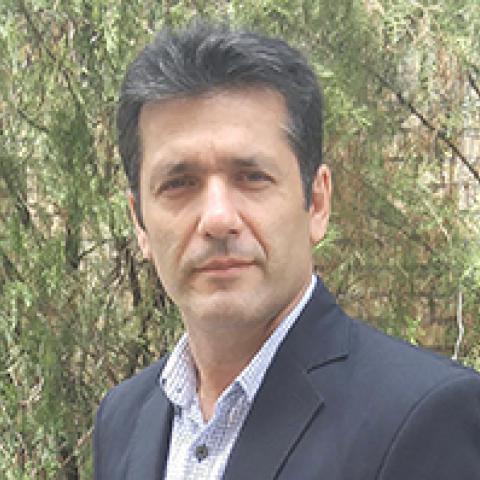
In this interview with Mark Kinra, Dr. Ali Omidi, Professor of International Relations, University of Isfahan, explained what is happening there.
Isfahan has been bombed multiple times, which is your city. Tell me what has happened to Isfahan since Feb 28, what is the damage, and are you still in Isfahan?
Isfahan is one of the major and central cities of Iran. Many garrisons and military establishments are located here. Isfahan is among the foremost cities of Iran after Tehran; it has the Bushehr nuclear plant here. For this reason, it is bombed every day by the U.S. and Israelis. As a result, some areas of Isfahan have been destroyed, including industrial and residential areas. Like many others, I had to travel out of the city for safety purposes.
It has been a month since the war began. Israel has decapitated the Iranian leadership beginning with the assassination of Supreme Leader Ayatollah Ali Khamenei on the very first day. Numerous political and military leaders have been assasinated since, the most recent being the head of Intelligence ofthe IRGC. Yet, we see no signs of any regime change in Iran. What explains this?
The Iranian political establishment is not dependent on individuals. It has been 47 years since the revolution; many institutions have been established, and these institutions run the country. However, individuals do have influence within these institutions; nevertheless, despite the loss of an individual or individuals, the system continues to function.
For this reason, after the killing of the Supreme Leader and many high-ranking commanders, Iran continues to respond against U.S. and Israeli aggression toward the country.
However, the continuation of this situation depends on many factors; these include the strength of the Iranian arsenal, how the infrastructure is functioning, and how the people are supported economically and financially. Iran is not run by individuals but by institutions and, as some Western analysts say, it operates as a networked authority.
We have heard reports that every province of Iran has its own IRGC, which is running on auto-mode with no central authority. How much do you think this is true? And do you think the IRGC will turn more hardline and have more authority after the war?
On the question of autonomy in several provinces, the structure of command and control exists and is not absent. There may be some level of autonomy, but the hierarchy of command remains intact and has not been damaged. Therefore, the view that every province of the IRGC has complete autonomy is not accepted. While there may be minimal autonomy, the provinces are commanded and controlled by the central IRGC commanding authority.
There are reports that the U.S. is willing to negotiate with Iran through Pakistani and other channels. How is Iran looking into this?
Regarding Pakistan’s role in negotiating, in closing the gap between Iran and the U.S., or in bringing Iran to the negotiation table, there is strong pessimism about such a possibility.
The Iranian authorities do not trust U.S. declarations. They perceive them as deception, war tactics, or as attempts to influence the market, including oil prices or the stock market. Their perception is that the U.S. intends to continue the war in order to topple the Iranian regime.
Both the U.S. and Iran have come up with a list of demands to end the war, but their demands are mutually exclusive. Will there be any middle ground? What are your thoughts?
There is deep pessimism, and it is considered impossible to compromise on their demands. Iran expects compensation, as it considers itself a victim of this war. If such compensation is not received, it will not be seen as a positive outcome. Therefore, it is unlikely that Iran will move toward negotiations.
For the time being, the belief is that Iran holds a relatively strong position in the war, even if not an overwhelmingly dominant one. It is believed that the country can continue the conflict. On the battlefield, it is seen as possible to assert and impose its demands on the U.S. and, by extension, on Israel.
The economy is hugely damaged. Do you think after the war it will be difficult for the regime to have control over the country? Can the people throw it off?
From an economic perspective, the economy is affected but not severely damaged. The economy in Iran continues to function. Supermarkets remain stocked, and the government is running the country effectively. It is not possible to immediately rebuild houses that were destroyed by bombing; people who have lost their homes are currently residing in hotels or in areas allocated by city municipalities. Overall, the economy is still functioning. There are problems, but not major ones. The damage is not as extensive as suggested.
From the beginning of the war, Western media has been reporting and leaking that it was Saudi Arabia that had kept egging the U.S. on for war against Iran. What do you think Saudi Arabia wants from this war? Why is it supporting the war on Iran?
The view that Saudi Arabia provoked the United States to initiate a war against Iran is not accepted. The decision to engage in the war was made by Donald Trump and Benjamin Netanyahu themselves. However, Saudi Arabia provided air bases and military facilities from its territory, which were used for carrying out attacks. It is believed that Saudi Arabia and other Persian Gulf countries are dependent states and do not possess full political autonomy. From the perspective of dependency theory, they are unable to reject U.S. demands and are required to follow them. Logistically, they provided support and facilities for U.S. attacks, but they did not provoke the United States to attack Iran.
At the political level, there is a clear divergence between Iran and countries such as Saudi Arabia and the United Arab Emirates. This divide has deepened since the revolution, leading to mutual pessimism and distrust.
If Iran’s political structure were to change in a way that reduces fear among the United States and Saudi Arabia regarding their neighbor, it would be more favorable for Saudi Arabia. However, it is clearly maintained that Saudi Arabia did not provoke the United States or Israel to attack Iran.
What do you think will the trajectory of Iran’s relations with the Gulf states be in the future?
The relationship with Gulf countries has been significantly damaged, and a lot depends on what happens after the war. If Iran wins the war, those countries will have to compromise with Iran, as it is their permanent neighbor. However, if Iran fails in the war and becomes a failed state, there will be a pessimistic future for relations between Iran and the southern Persian Gulf countries.
About The Author
