Iran and the UAE: A Complex Relationship Unravels
This makes the UAE the biggest target of Iran since the joint US-Israel war on it began on 28 February.
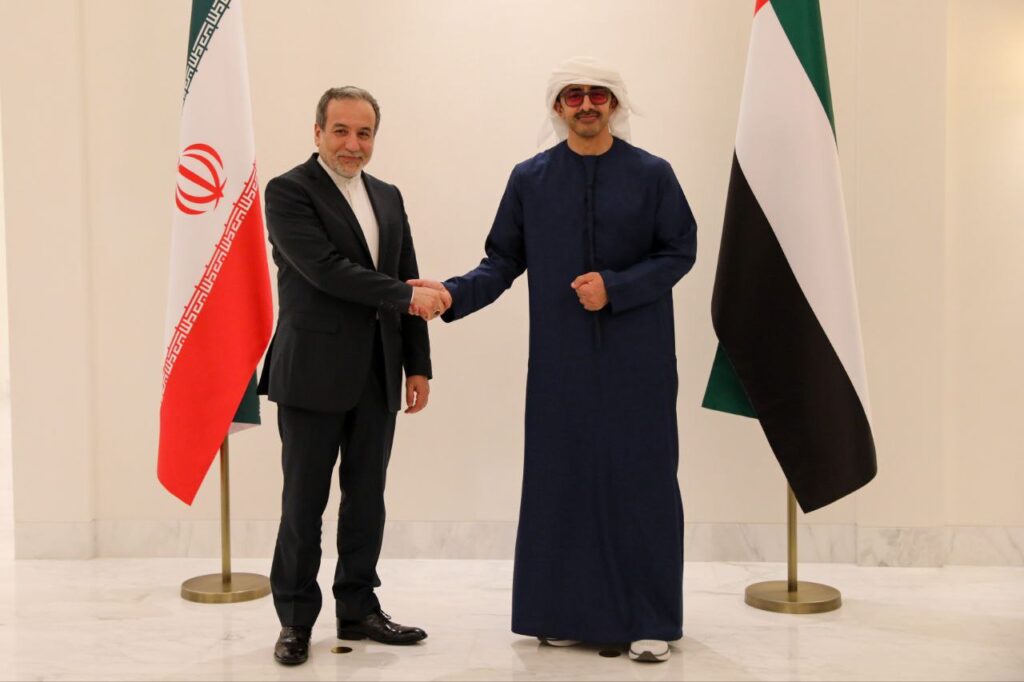
By Aditi Bhaduri
According to the latest statistics released by the UAE Ministry of Defense, the country’s air defenses have engaged 457 ballistic missiles, 19 cruise missiles, and 2,038 drones launched by Iran. This makes the UAE the biggest target of Iran since the joint US-Israel war on it began on 28 February. In fact, on the very first day Dubai airport, the city’s famed Burj Al-Arab hotel, the landmark Palm Jumeirah, and Jebel Ali port were hit by missiles f
Exasperated by these attacks, the UAE, reports say has asked the US to continue the war in Iran and complete the job there. In the latest update, however,it has ruled ouf putting bootson tgd ground in Iranm byt has signalled its willingness to join any multi-nation endeavor to open up the Strait of Hormys to international shipping, after Iran effectually closed the strategic waterway.
These developments spotlight a complex relationship between the two neighbouring states that share waterways, communities, and extensive trade links.
The UAE is Iran’s second-largest trading partner, with bilateral trade amounting to around $25-27 billion annually. In 2024 Iran imported over $20 billion worth of goods from the UAE, making the UAE Iran’s largest single source of imports. At the same time Iranian non-oil exports to the UAE was more than $6 billion. Around half a million Iranians live and work in the UAE, with the community dating back decades, preceding the birth of the Islamic Republic in 1979.
Yet tensions have persisted – territorially snce the UAE’s birth in 1971, ideologically since the Iranian Islamic revolution in 1979, spilling over into wider geo-strategic considerations.
Territorially,Iran and the UAE are locked in a dispute over three tiny islands – Abu Musa, Greater Tunb and Lesser Tunb. The largest Aby Musa has a population of 9nly around 2000 people. But they occupy an extremely strategic location – sitting as they are at the entrance to the strait of Hormuz, whose importance by now needs no further enumeration. These islands serve as useful bases to monitor maritime traffic through the Strait and for Iran’s naval defense architecture.
Britain had occupied the islands in 1908. When the UAE gained freedom from the British in 1971, the British withdrew from these islands. Iran under then Shah Reza Pehlavi occupied the islands, citing old maps, including by the British. The UAE however maintained that they are the rightful owners. Given Iran’s size andits military muscle, the UAE has been restrained,relying mostly on diplomacy. The UAE’s size – 83,600 km2 total – and population strength – the local Emirati population is only1.33 million out of a total population of 11. 57 million in the UAE in 2026, where the rest are comprises expatriates, has shaped its approach to Iran,, as also to the wider region, – diplomacy and mediation, even as it perceived Iran as a regional hegemon.
The 1979 Islamic revolution in Iran which overthrew the Shah, and established a republic added another layer of complexity to regional politics. All the five Gulf Sheikhdoms, along with the Kingdom of Saudi Arabia are hereditary monarchies, with some like the UAE also representing a federative union, with a constitution to give it semblance of a democratic polity. But they all remain absolute monarchies. Furthermore, Iran began exporting its revolutionary ideology. The small sheikhdoms sought to hedge themselves and their enormous oilwealth by constituting the Gulf Cooperation Council and investing in American security and defence procurement. Today all the GCC states house US airbase. Of them, the UAE hosts the Al Dhafra Air Base, which hosts American, French, and Emirati air forces, while the Jebel Ali port in Dubai hosts U.S. Navy ships, making the UAE a key logistical hub. There are, besides, UK and French military bases as well, which have been a cause for tensions between Iran and the UAE. The UAE also closely aligned itself with Saudi Arabia, thoughthat alliance has recently comeunder strain.
Over the years, the invasion of Kuwait by Saddam Hussein ‘s Iraq, the Arab Spring, and the rise of radical Sunni forces both as state power – as seen in Turkey, Afghanistan with the return of the Taliban there – and through the emergence of non-state actors like the ISIS (Islamic State in Iraq and Syria) imparted other dynamics in regional geopolitics. The UAE, given its territory and population, was particularly vulnerable. It sought to counter both Shiite and Sunni radicalism. When the UAE took the unprecedented step of intervening militarily, together with Saudi Arabia, in the Yemen civil war in 2015, it was as much to prop up the legitimate government of President Abdul Hadi Mansour, as it was to push back against Iran which wax liberally training, arming, and financing the Houthi rebels there. It was the same logic that had made UAE support anti-Assad groups during the Syrian Civil War- to contain Iranian influence in the region. But the intervention in Yemen produced only a stalemate withthe Houthis targeting both Saudi Arabia and the UAE. It has since withdrawnfrom Yemen, but it pursued other efforts to counter the twin threats of Sunni and Shiite radicalism.
One was to follow policies for increasing tolerance and pluralism in UAE society, like building temples, restoring churches in post-conflict Iraq, initiating inter-faith dialogues, easing social activities and norms for expatriates. This is pragmatic given that almost 80 percent of the UAE’s population comprises expatriates, most of whom belong good different faiths and cultures.
The other was to diversify its strategic partnerships with players like Russia, China, South K9rea and India. But the most pathbreaking was the normalization of relations with Israel, through the Abraham Accords. The UAE become the third Arab country, and the first GCC member to establish diplomatic relations with .Israel, known for its intelligence gathering and military prowess. This rang alarm bells in Tehran which was fighting a shadow war with .Israel for decades by then. Even a moderate like then Iranian President Hassan Rouhani condemned yhs move in strong terms as a “betrayal” of the Palestinian people.
The issue of Palestine has placed the Gulf monarchies in an awkward position. 9n one hand they continuedtgdir aid and pledges to the Palestinian people, yet despite their close alignment with the US had been unable to materialize them into any meaningful resolution. A Palestinian state has never seemed more elusive than now.
In contrast, Iran was arming the Hamas, though a Sunni group, in Gaza, who seemed the only force seen to counter Israel’s occupation and penalizing actions against the Palestinians. The GCC states seemed helpless and the Abraham Accords, from Iran’s point of view, was another instance of Israel prevailing over the Arabs. Following in the footsteps of the UAE was Bahrain. The former therefore had opened up the process of normalization between Israel and the Gulf states. Doing so, also brought Israeli presence closer to Iran geographically.
Yet, geography dictated that the UAE and Iran were also connected through trade, financial and other economic linkages. Like Indians, many Iranians had helped to build up the emirates yo make it what it is. Western sanctions on Iran also made the UAE ths primary gateway for Iran’s trade and financial dealings with the outside world. The country ‘s ports like Dubai and logistics networks made it an important re-export hubs for goods entering Iranian markets, providing Iran access to global supply chains.
That is why it remains inexplicable why majority of Iran’s projectiles have been aimed at the UAE. The UAE has responded with remarkable restraint, even as it has condemned Iran’s attacks as well as the joint US-Israel assault on Iran. The closure of the Strait of Hormuz has meant that the UAE, along with other Gulf countries who ude the Strait, has been unable to transport its energy exports, as well as other critical commodities like fertilizers.
Of course, the UAE is the closest country to Iran which houses US bases. It has also cultivated extremely close ties with Israel, both countries pummeling Iran from the skies now. Iran hax said it woul target US basesin tgs region which it has been faithfully doing. As a key logistics, trade, and financial hub the UAE has suffered losses in billions over dollars, by being Iran’s main target. Could it be that by targeting its vital infrastructure, and reputation as a secure and safe haven Iran is attempting to cause longterm damage to the plans floated for the India- Middle East – Europe Economic Corridor, of which the UAE is a major cog? For that would certainly give Iran’s Chabahar port which it was developing as a key logistics and transport hub, major competition. Though Chabahar port has its own merits, this would certainly seem a possibility.
About The Author
