The Pakistan–Sudan Arms Pipeline: Geopolitical Realignments, Human Rights Concerns, and Legal Scrutiny
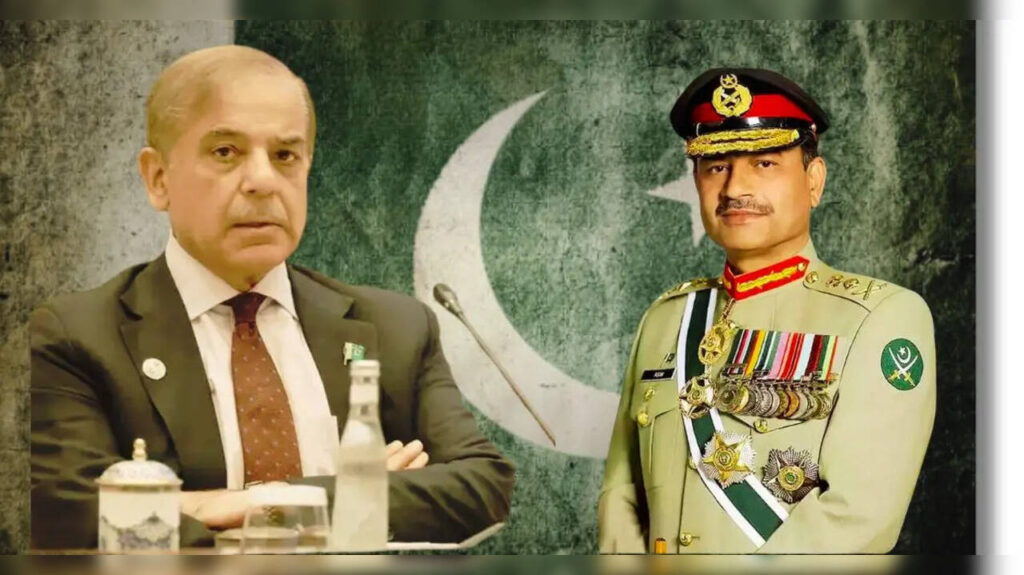
The Pakistani military credited with sustaining Sudan’s army carries a long-documented record of using heavy force against its own population, particularly in Balochistan
7By Munir Mengal
A Saudi commentator’s unusually direct account of Riyadh’s role in Sudan has cast fresh light on a reported $1.5 billion Pakistani arms deal — and drawn formal appeals to the United Nations from Baloch organizations warning that the arms transfers threaten to fuel both Sudan’s civil war and domestic repression in Pakistan.
A rare public admission from Riyadh’s Camp Saudi influencer, op-ed writer, and political analyst Mohammad Al-Sultan has publicly credited Saudi Arabia and Pakistan with helping the Sudanese Army withstand the Rapid Support Forces (RSF), offering an unusually direct account of Saudi Arabia’s alleged role in the conflict. Al-Sultan argued that without joint support, the Sudanese Armed Forces (SAF) under Gen. Abdel Fattah al-Burhan would have been defeated by the RSF led by Mohamed Hamdan Dagalo (Hemedti), potentially allowing the RSF to reach Sudan’s Red Sea coast and threaten the Egyptian border.
Crucially, Al-Sultan framed Riyadh’s position as support for the Sudanese state structure rather than Burhan personally, claiming Saudi Arabia arranged arms deals—including armored vehicles, tanks, aircraft, and drones—at a critical juncture. While acknowledging what he described as the role of God Almighty and the courage of the Sudanese people, his comments portray Saudi Arabia as far more than a diplomatic actor. Al-Sultan also criticized Egypt’s handling of the conflict as “very weak,” arguing that Saudi and Pakistani intervention prevented further RSF advances.
Tracking the Defense Pipeline
Al-Sultan’s claims align with a growing body of investigative reporting:
Initial Negotiations: In January 2026, Reuters reported that Pakistan was in the final phases of a $1.5 billion deal to supply weapons and jets to Sudan, with former officials suggesting Saudi financing. Al Jazeera examined whether the deal signaled a broader Pakistani military footprint in the Arab world, while the Washington Institute noted Pakistan’s entry into a Saudi–Egyptian–Turkish alignment supporting the SAF.
Diplomatic Delays: In April 2026, Al-Monitor reported that Pakistan placed the sale on hold after Saudi Arabia requested the agreement’s termination and withdrew financing following a meeting in Jeddah between Crown Prince Mohammed bin Salman and Burhan.
Visual Confirmation: Despite reported pauses, equipment transfers materialized. The Defense Post reported in August 2026 that Sudan received roughly 100 Pakistani-made Mohafiz infantry mobility vehicles for deployment in Kordofan and Darfur, marked by sightings of Mohafiz-V vehicles during a military parade in Khartoum.
Expanded Capabilities: News18 and conflict-monitoring group ACLED noted that the reported hardware package extends to Shahpar-2 armed drones, Turkish-Pakistani YIHA-III loitering munitions, K-8 Karakorum light attack aircraft, and Chinese-origin air-defense systems. Policy analyses by BARQ and Intelligence Online further indicated Saudi supplies of heavy artillery, including U.S.-made M777 howitzers, to the SAF.
A Track Record That Worries the Baloch The Pakistani military credited with sustaining Sudan’s army carries a long-documented record of using heavy force against its own population, particularly in Balochistan. Security forces have repeatedly deployed gunship helicopters, drones, and fixed-wing aircraft against armed groups and civilian areas. Al Jazeera reported operations in Nushki, while the Balochistan Times, Balochwarna News, CNBC TV18, and IANS documented heavy aerial bombardments and strikes across Khuzdar, Kalat, Bolan, Surab, Jhao, and Mastung—including an August 2026 strike in Gidar that reportedly killed over 30 civilians.
Baloch Groups Appeal to the UN Against this backdrop, the Baloch Peoples Congress (BPC), alongside allied Pashtoon and Sindhi organizations, has formally appealed to the United Nations, African Union, and human rights bodies to intervene against the transfer of HIT Armour-manufactured Mohafiz-V vehicles and associated air assets. Framing their appeal in explicit legal terms, the BPC called for:
An immediate suspension of all alleged Pakistani arms transfers to Sudan.
An independent investigation into the reported military cooperation, financing, and intermediaries.
Accountability for the alleged use of such weapons against civilian populations.
An independent audit of revenue generated from arms exports.
Intervention by international bodies to prevent further militarization of the Sudan conflict.
News18 and EU Today reported concerns from activists that the estimated $1.5 billion in export revenue could be reinvested directly into Pakistan’s domestic security apparatus, enhancing military capacity for internal operations across Baloch, Sindhi, and Pashtun regions.
International Legal Scrutiny
The reported deal faces critical examination under international legal frameworks governing arms transfers:
Arms Trade Treaty (ATT) Standards: Although Pakistan is not a State Party to the ATT, Articles 6, 7, and 11 establish international benchmarks. They prohibit transfers where an exporting state knows weapons would be used for grave crimes, require objective risk assessments regarding human rights violations, and mandate measures to prevent arms diversion.
UN Sanctions Mandates: Under Security Council Resolutions 1556 (2004) and 1591 (2005), strict arms embargoes apply to actors operating in Darfur. The UN Panel of Experts monitors compliance, requiring strict end-user documentation for non-prohibited defense imports.
Human Rights Directives: Human Rights Council Resolution A/HRC/RES/59/13 (2025) explicitly reinforces the link between unchecked arms flows to active war zones and severe violations of international humanitarian law.
Why It Matters Neither Islamabad nor Khartoum has officially confirmed the deal, and Riyadh has never publicly acknowledged a combat role in Sudan. Al-Sultan’s commentary provides a rare, on-the-record view of Saudi Arabia and Pakistan acting as decisive military backers of the SAF rather than neutral mediators.
Ultimately, the episode binds together two conflicts rarely examined together. In Sudan, the reported Pakistani-Saudi defense pipeline has expanded the SAF’s air and ground capabilities against the RSF. In Balochistan, the exporting military maintains similar aerial campaigns against local communities. For Baloch advocates, weapons flowing to Sudan are directly linked to domestic repression, making the Sudan war a critical flashpoint where Pakistani defense manufacturing, Saudi financing, and internal domestic conflict intersect.
For further background on the initial reports surrounding this arms deal and its regional implications, you can watch Saudi Arabia blocks Pakistan’s $1.5B Arms Deal. This video provides helpful coverage detailing the breakdown of the $1.5 billion defense deal and the diplomatic shifts between Riyadh, Islamabad, and Khartoum.
Views are personal and IAR neither endorses nor is responsible for the same.
About The Author
