Maritime Insurgency and Historical Memory: The Baloch Liberation Army’s Naval Turn
Mir Hammal Jiand occupies a central place in Baloch historical memory. As a leader of the Hoth/Kalmati tribe, he commanded a fleet of small, fast vessels ghalbas well adapted to the shallow waters and intricate coastline of Makran.
By Mark Kinra
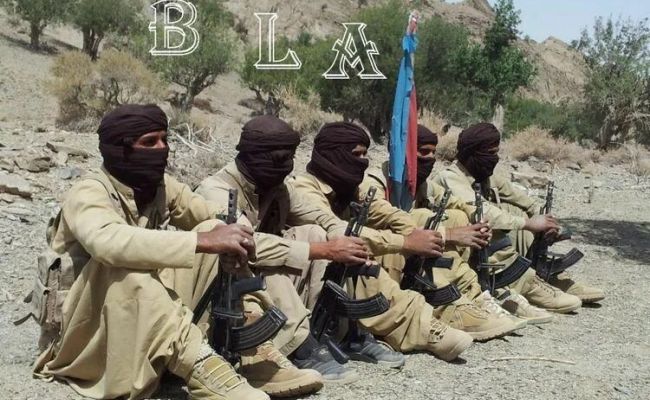
On April 12, 2026, the Baloch Liberation Army (BLA) claimed responsibility for its first recorded maritime attack in the Jiwani region of Gwadar. According to the group, its fighters referred to as Sarmachars used speedboats and automatic weapons to target a Pakistani naval or coast guard patrol vessel, reportedly killing three personnel. Shortly thereafter, the BLA announced the formation of a naval wing, the Hammal Maritime Defence Force (HMDF).
The naming of this unit after Mir Hammal Jiand Baloch, a 16th-century figure associated with resistance to Portuguese expansion, is not incidental. Rather, it reflects a deliberate effort to embed contemporary insurgent strategy within a longer historical narrative of maritime resistance along the Makran coast. This development is significant not only in operational terms but also in its symbolic invocation of continuity.
Understanding the implications of the HMDF requires situating it within two broader contexts: the early modern history of Baloch resistance to Portuguese naval power and contemporary patterns of insurgent maritime warfare in South and Southeast Asia.
Portuguese Expansion and the Makran Littoral
The Portuguese arrival in the Indian Ocean in the early 16th century marked a structural shift in regional geopolitics. Through the Estado da Índia, Portugal sought to impose a monopolistic trading order across maritime routes linking the Persian Gulf, East Africa, and the Indian subcontinent. While historiography has largely focused on Portuguese strongholds such as Goa and Hormuz, the Makran coast constituted an important yet understudied frontier of resistance.
Portuguese engagement with the region was shaped by two principal objectives. First, the enforcement of the cartaz system sought to regulate maritime commerce by requiring vessels to obtain Portuguese-issued passes, effectively criminalizing independent trade. Coastal settlements such as Gwadar, Pasni, and Tiz became focal points in this system.
Read Also: The Iran Trap and the Balochistan Alternative
Second, Portuguese strategy was influenced by rivalry with the Ottoman Empire. The Makran coast functioned as a logistical corridor for Ottoman naval operations, with Baloch communities providing provisions and intelligence. Portuguese expeditions were therefore often punitive, aimed at disrupting these linkages.
Cycles of Conflict and Limited Control
Portuguese–Baloch interactions unfolded as a prolonged series of raids, reprisals, and temporary accommodations rather than a single decisive conflict.
Following the capture of Hormuz in the early 1500s, Portuguese patrols extended along the Makran coast to enforce the cartaz system. By the mid-16th century, these encounters escalated into organized violence. Campaigns such as the 1547 raids led by Manuel de Lima and subsequent engagements including the reported defeat of a Portuguese fleet under Luís Figueira in 1549 demonstrated both the coercive capacity of the Portuguese and the resilience of local resistance.
Periods of relative stability, including a ceasefire negotiated with Mir Hammal Jiand, proved temporary. By the late 16th century, Portuguese strategy shifted toward systematic destruction. Expeditions such as Dom Luís de Almeida’s campaign in 1581 and Rui Freire de Andrade’s operations in 1619 employed scorched-earth tactics aimed at dismantling coastal infrastructure and severing Baloch-Ottoman linkages.
Despite these efforts, Portuguese control over the Makran coast remained limited. Geographic constraints, logistical challenges, and persistent local resistance prevented the establishment of durable authority.
Mir Hammal Jiand and Asymmetric Maritime Resistance
Mir Hammal Jiand occupies a central place in Baloch historical memory. As a leader of the Hoth/Kalmati tribe, he commanded a fleet of small, fast vessels ghalbas well adapted to the shallow waters and intricate coastline of Makran.
Read Also: Pakistan’s intimidation only strengthens our resolve for Balochistan: Nazir Noor Baloch
His operational approach reflected an early form of asymmetric maritime warfare. Rather than confronting Portuguese naval power directly, his forces relied on speed, maneuverability, and environmental familiarity. This enabled sustained resistance despite disparities in technology and firepower.
Hammal’s capture around 1581 appears to have been a targeted Portuguese effort to neutralize a key leader. Transported to Goa, India, he was subjected to policies of elite co-option, including offers of conversion and integration into the colonial order. His refusal represented both cultural defiance and a rejection of Portuguese political authority.
His legacy endured through oral traditions, particularly poetic cycles that preserved a distinct maritime identity even after the decline of Baloch seafaring power.
Structural Limits of Portuguese Power
The failure of the Portuguese to consolidate control over the Makran coast can be attributed to structural constraints. The region’s geography arid terrain and shallow coastal waters limited the effectiveness of large naval platforms and hindered the construction of permanent bases. Decentralized tribal resistance further complicated attempts at centralized governance.
Equally important was the absence of reliable local collaborators. Portuguese strategies of elite assimilation yielded limited success, depriving them of the legitimacy required for sustained control. By the mid-17th century, Portuguese influence in the region had largely dissipated.
Insurgent Naval Capabilities in South Asia and South-East Asia
The emergence of the Hammal Maritime Defence Force (HMDF) is not an isolated phenomenon. Rather, it reflects a broader, though relatively rare, pattern in which insurgent organizations develop maritime capabilities to offset conventional military asymmetries. In South and Southeast Asia, where long coastlines, dense littoral populations, and complex riverine systems intersect, the maritime domain has periodically provided non-state actors with opportunities to challenge state authority in unconventional ways.
Read Also: Once Independent, Now Divided: The Political Disarray of Balochistan’s Freedom Movement
Two cases are particularly instructive: the maritime operations of the Liberation Tigers of Tamil Eelam (LTTE) in Sri Lanka and the evolving naval dimension of the Arakan Army (AA) in Myanmar. While differing in scale, maturity, and strategic context, both illustrate how insurgent groups can transform geographic constraints into operational advantages.
The Sea Tigers and the Institutionalization of Insurgent Naval Power
The LTTE’s naval wing, commonly known as the Sea Tigers, represents the most sophisticated example of insurgent maritime capability in the modern era. Established in the mid-1980s during the Sri Lankan Civil War, the Sea Tigers evolved from a rudimentary coastal defense unit into a highly organized semi conventional maritime force.
Operational Doctrine
At the core of the Sea Tigers’ success was a doctrine built on asymmetry, decentralization, and speed. Rather than attempting to match the Sri Lankan Navy (SLN) in firepower or platform sophistication, the Sea Tigers emphasized:
Swarm Tactics:
Deploying large numbers of small, high-speed craft to overwhelm larger naval vessels. These attacks relied on coordination, speed, and the element of surprise, often targeting vulnerabilities in the defence perimeter of conventional ships.
Suicide Warfare (Black Sea Tigers):
The integration of suicide missions into naval operations marked a decisive innovation. Explosive-laden boats, piloted by highly trained cadres, were used to strike high-value targets such as offshore patrol vessels and logistics ships. These operations not only inflicted material damage but also had a significant psychological impact.
Littoral Mastery:
The Sea Tigers exploited the shallow waters, lagoons, and complex coastal terrain of northern Sri Lanka. This environment limited the maneuverability of larger naval vessels while enhancing the effectiveness of smaller craft.
Technological and Logistical Innovation
A defining feature of the Sea Tigers was their capacity for indigenous adaptation:
Locally Manufactured Craft:
The LTTE developed fast attack boats, stealth vessels, and semi-submersibles tailored to operational needs. While technologically rudimentary compared to state navies, these platforms were optimized for speed, concealment, and cost-effectiveness.
Proto-Submersible Capabilities:
Although their submarine projects were limited in operational success, they reflected an ambition to expand into undersea warfare and evade detection.
Floating Logistics Network:
Perhaps the most strategically significant innovation was the use of merchant vessels stationed in international waters as “floating warehouses.” These ships stored arms procured through transnational networks and enabled sustained resupply despite state-imposed blockades.
Organizational Structure and Human Capital
The Sea Tigers were not an ad hoc formation but a structured organization:
Estimated strength of 2,000–3,000 personnel at their peak
Inclusion of women in frontline combat roles
Recruitment heavily drawn from coastal fishing communities, providing deep maritime expertise
Read Also: Balochistan: In the Crosshairs of History (Book Review)
Specialized units dedicated to intelligence, engineering, logistics, and suicide operations
Strategic Impact
The Sea Tigers fundamentally altered the operational environment in Sri Lanka:
They imposed significant costs on the Sri Lankan Navy, including the loss or damage of numerous vessels
They disrupted maritime supply lines and challenged state control over coastal waters
For extended periods, they maintained de facto maritime zones of influence
Their eventual defeat in 2009 required a multi-layered counter-strategy, including naval expansion, improved surveillance, and the systematic targeting of their offshore logistics network. This underscores a critical point: insurgent naval forces can be highly effective, but they remain vulnerable to sustained, coordinated state responses.
The Arakan Army and the Evolution of Hybrid Maritime Insurgency
The Arakan Army (AA) presents a more contemporary and still-evolving model of insurgent maritime capability. Operating in Myanmar’s Rakhine State, the AA has gradually expanded from a land-based guerrilla force into a hybrid actor with significant control over coastal and riverine areas.
Gradual Maritime Expansion
Unlike the Sea Tigers, whose naval wing was central to their strategy from an early stage, the AA’s maritime capabilities have emerged incrementally. This evolution reflects both operational necessity and opportunity, as control over the coast and river systems became essential to sustaining territorial gains.
Operational Capabilities
The AA’s maritime operations are characterized by integration rather than specialization:
Drone-Integrated Warfare:
One of the most notable developments has been the coordination of naval actions with drone strikes. The reported January 2026 attack on the Dhanyawaddy naval base illustrates a degree of operational sophistication in which aerial and maritime assets are used in tandem.
Small-Boat Operations:
Similar to LTTE tactics, the AA employs fast boats for harassment, interdiction, and enforcement of riverine blockades. These operations are particularly effective in confined waterways such as the Kaladan River.
Heavy Weapon Deployment:
The reported use of surface-to-surface missiles and artillery against naval targets marks a significant escalation, indicating access to more advanced weapon systems.
Naval Mining:
The use of improvised or conventional naval mines introduces an element of area denial, complicating state naval operations and increasing the risks associated with riverine movement.
Territorial Control and Institutionalization
A key distinction between the AA and LTTE lies in its territorial consolidation:
Control over significant stretches of coastline and border areas
Ability to regulate maritime movement and taxation
Establishment of structured units, often referred to as the “Arakan Coast Guard,” with an estimated strength exceeding 10,000 personnel
Read Also: Balochistan: Decoding Death Squads
This institutionalization suggests a transition from insurgency toward proto-state maritime governance.
Strategic Outcomes
The AA’s maritime evolution has yielded tangible results:
Successful attacks on naval assets, including the reported sinking of vessels
Capture of naval infrastructure, such as the Maung Shwe Lay base in 2024
Increased capability to challenge state sovereignty in coastal areas.
The formation of the HMDF suggests that the BLA may be attempting to emulate elements of these models. The use of small, fast boats indicates an initial reliance on asymmetric tactics, while the potential integration with drone capabilities points toward multi-domain operations.
However, the Makran coast presents distinct challenges. Its open maritime environment may complicate sustained insurgent activity.
Strategic Implications
Balochistan’s approximately 750-kilometer coastline occupies a strategically sensitive position near major global shipping routes and the Strait of Hormuz. The introduction of insurgent maritime activity in this context has implications that extend beyond the immediate conflict.
Even limited capabilities could disrupt naval operations, increase risks to commercial shipping, and compel greater resource allocation toward maritime security. The psychological and economic effects of such threats may outweigh their immediate tactical impact.
The establishment of the Hammal Maritime Defence Force represents both a tactical evolution and a symbolic act rooted in historical memory. By invoking Mir Hammal Jiand, the BLA situates its maritime ambitions within a longer narrative of resistance along the Makran coast.
At the same time, regional precedents demonstrate that insurgent naval capabilities if allowed to develop can significantly alter the balance between state and non-state actors. Whether the HMDF evolves into a sustained maritime force remains uncertain. What is clear, however, is that the maritime domain is no longer peripheral to the Baloch insurgency. It has emerged as a new and potentially consequential arena of contestation.
Mark Kinra is Associate Editor, IAR
About The Author
