From Banquets to Blockades: The Stark Reality of the US-Iran Summit
By Mark Kinra
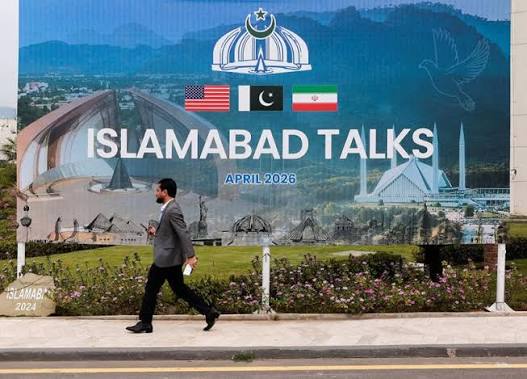
The stage was set with unparalleled grandeur. In a bid to cement its role as a global mediator, Pakistan pulled out all the stops for what was hoped to be a historic peace deal between the United States and Iran.
A Royal Welcome
The summit began with a display of soft power meant to soften decades of hardline positions. Pakistan spared no expense, transforming the venue into a bastion of luxury. Reports from the ground highlighted a sprawling spread of traditional Pakistani delicacies designed to impress the visiting delegations.
The menu was a masterclass in culinary diplomacy, featuring succulent lamb Sajji, aromatic Biryani, and an array of hand-crafted desserts. The government reportedly converted a massive hall into a dining experience just beyond the reach of the public, intended to provide a serene environment for the Trump administration and Iranian officials to find common ground. Yet, despite the five-star arrangements, the atmosphere inside the negotiating rooms remained suffocatingly tense.
The Clash of Expectations
To understand why the talks in Islamabad reached a deadlock, one must look at the irreconcilable gap between the American and Iranian frameworks. Here is a comprehensive breakdown of the core points of contention:
Nuclear Enrichment & Infrastructure: The U.S. demanded zero domestic enrichment and the total dismantling of major strategic sites (Natanz, Fordow). Iran countered with a demand for formal recognition of its sovereign right to enrich on its own territory.
Stockpiles & Inspections: Washington required the full handover of all highly enriched uranium and a permanent, intrusive monitoring regime. Tehran demanded the removal of all IAEA resolutions criticizing its past and refused to offer new “affirmative commitments.”
Economic Sanctions: The U.S. offered relief only after verifiable compliance with all points. Iran demanded the immediate and complete lifting of all primary and secondary sanctions and the termination of all UN Security Council resolutions against them.
Regional Proxies & Groups: The U.S. called for a total cessation of all funding and arms to Hezbollah, the Houthis, and Hamas. Iran insisted on protection and immunity for the “Islamic Resistance,” framing them as a non-negotiable regional defense layer.
Maritime Access (Hormuz): The U.S. sought to designate the Strait of Hormuz a “Free Maritime Zone”—permanently open without interference. Iran maintained its right to sovereign control, insisting passage must be coordinated with their naval forces.
Military Presence: Iran demanded a full and immediate withdrawal of all U.S. combat forces from the Middle East. The U.S. intended to retain regional bases until a “verifiable and permanent” peace is established.
Missile Capability: Washington pushed for strict limits on the range and quantity of ballistic missiles. Tehran declared its missile program non-negotiable, citing it as a vital tool for national deterrence.
The “Israel” Threshold: The U.S. made formal acknowledgment of Israel’s right to exist a core condition. Iran flatly rejected this, demanding an end to “Zionist aggression” and reparations for damages instead.
Civilian Nuclear Support: As an alternative to enrichment, the U.S. offered technical fuel support for the Bushehr plant. Iran rejected this fuel dependency, preferring indigenous fuel production for its energy needs.
Ceasefire & War Fallout: The U.S. proposed an initial 30-day ceasefire (excluding Lebanon). Iran demanded a permanent end to the war across all fronts and reparations for the seven-week conflict.
Sunset Clauses: The U.S. demanded the agreement be permanent with no expiration dates on restrictions. Iran demanded binding UN-backed guarantees that no future U.S. president could withdraw from the deal.
Cyber & Internal Security: The U.S. demanded an end to Iranian state-sponsored cyber-operations. Iran countered with a demand for a guarantee of non-interference in its domestic political and security affairs.
Trump’s “Our Final, Best Offer”
The breakdown became official when Vice President J.D. Vance issued a blistering statement confirming that the talks had collapsed. Vance characterized the U.S. proposal as a “final, best offer,” expressing frustration that the Iranian leadership chose to reject what he deemed a fair path. “We leave Islamabad with our offer on the table, but we will not compromise on the safety of our allies,” Vance stated, signaling a return to the “Maximum Pressure” campaign.
Tehran has characterized the collapse of the Islamabad summit as a rejection of “unilateral mandates” and “excessive American demands,” framing the failure not as a diplomatic setback but as a successful resistance against Western pressure. Iranian officials, including Foreign Ministry spokesperson Esmaeil Baqaei, labeled the U.S. 15-point plan as “ambitious and illogical,” asserting that diplomacy cannot be used to secure concessions that the U.S. failed to achieve through military force. While expressing a rare note of appreciation for Pakistan’s role as a “benevolent” mediator, Iran remains steadfast in its refusal to offer “affirmative commitments” on nuclear dismantling or recognize Israel. Ultimately, Tehran has signaled that it views the negotiating table as a “continuation of the sacred jihad,” maintaining that any future deal is contingent on the full recognition of its “legitimate rights” and the immediate lifting of all economic sanctions.
Iranian Professor of University of Isfahan Ali Omidi says “the talks in Islamabad have failed, and the two countries could not compromise on the sticking points. There are two sticking points.
One is the Strait of Hormuz. Iran believes that it is a winning card in the war. If Iran loses its control, there is no winning card at hand for bargaining with the U.S. and others. So Iran is very persistent in having control and influence over navigation in the Strait of Hormuz. The second sticking point is Iran’s stockpile of enriched uranium, especially above 60 percent. The U.S. expects to get rid of it by transferring it from Iran to other countries. Iran insists that it can, through a deal, dilute the enrichment to a lower degree, below four or three percent, but this still raises U.S. concerns. I think these sticking points hinder the two countries from reaching a compromise. You know, about the future, given Trump’s personality his arrogant personality. I think he may use force against Iran. It is unavoidable to have a conflict between Iran and the U.S., especially over the Strait of Hormuz. Trump recently proposed a blockade, a sea blockade of Iran. It is very difficult, but I think it is a sign of a major conflict between Iran and the U.S. However, I think war is not the final solution. War cannot solve the problem between the U.S. and Iran. I think the best way for the U.S. is to resort to diplomacy. If the U.S. could—although in the last war it got what it wanted, it also failed to achieve its broader goals—I think conflict is unavoidable, but I cannot predict the degree and the extent of this conflict.”
Any room for Dialogue?
The U.S. delegation is heading home and have stated that the “ball is in Iran’s court” to accept those terms without further modification and President Trump has already ordered a naval blockade of the Strait of Hormuz to begin on April 13, 2026. Tehran has taken a more ambiguous, though slightly more diplomatic, position regarding the future. the Iranian Foreign Ministry stated that “negotiations will continue despite some remaining differences.” Foreign Ministry spokesperson Esmaeil Baqaei noted that Iran remains committed to using “all tools, including diplomacy,” to safeguard its interests. However, they maintain that any further progress is entirely dependent on the U.S. showing “good faith” and dropping what they call “unlawful requests.”
West Asia Expert, Journalist and Editor of International Policy Digest Manish Rai says, “The recent talks in Islamabad were preliminary and lacked a predetermined agenda. Consequently, we shouldn’t have anticipated any significant outcomes from these multi-round discussions. The objective of these discussions was to establish the foundation for more comprehensive negotiations in the future and the necessary conditions for a permanent ceasefire. However, these goals were not realized, as neither party was able to establish any common ground”.
The Staring Reality of the “Kazi”
Pakistani Journalist Jaffar Khan Kakkar says “Pakistan is playing constructive role in the peace talks and facilitating these initiatives which is being recognized at the global stage. Whether peace prevails or not, Pakistan has gained and in case war resumes Pakistan is ready to face any challenges.”
While it is projected as Pakistan’s great diplomacy moment which, in terms of optics, it certainly is the reality is far more stark. Pakistan has signed a significant defense agreement with the Kingdom of Saudi Arabia (KSA), and if these diplomatic efforts do not succeed, Pakistan might be forced to enter a war to protect Saudi interests. Pakistan is trying hard to balance this dangerous tightrope, but the situation can be summed as: Na Dulha Razi, Na Dulhan Razi, Sirf Kazi hi Kazi (Neither the groom nor the bride is willing; only the priest is busy).
Diplomacy and the Stick
Pakistan recently confirmed the deployment of approximately 13,000 troops and fighter jets to Saudi Arabia. Though Islamabad framed the deployment as part of a bilateral security agreement and “internal defense” assistance for the Kingdom, the timing is unmistakable. While Islamabad frames this as a bilateral security arrangement, the move underscores the high stakes: if the “Kazi’s” diplomacy fails to marry these two rivals in peace, the military assets already on the ground suggest that Pakistan is prepared for a much more violent alternative.
As the delegations depart Islamabad, the “lavish stage” is being dismantled. The empty halls and untouched leftovers serve as a somber reminder that in the world of high-stakes geopolitics, even the finest hospitality cannot bridge the chasm of deep-seated ideological defiance. The world now waits to see the fallout of a summit that promised peace but delivered only a deeper divide.
About The Author
