The Israel-US war on Iran is Escalating Dangerously; Can India Take any Initiative for Peace in the Region?
7 months ago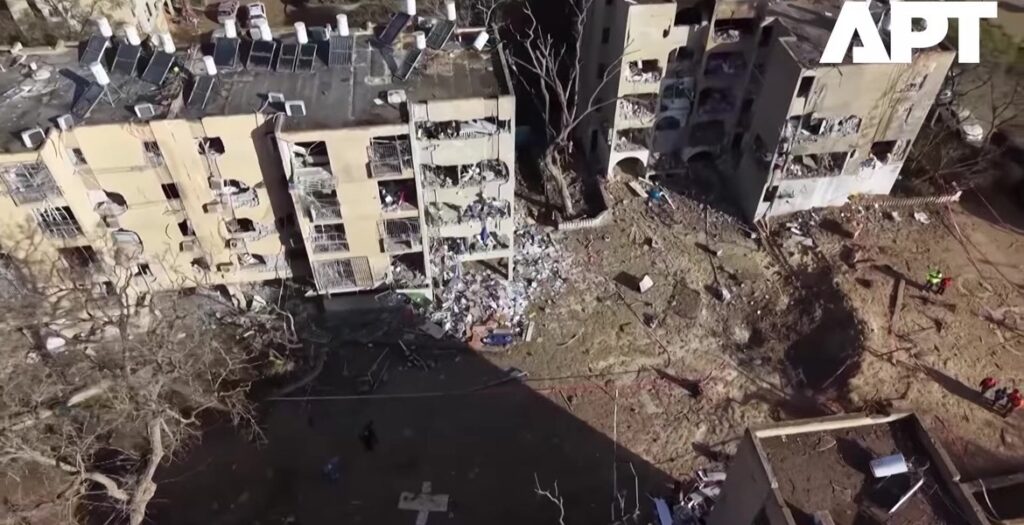
By Aditi Bhaduri
It is day 24 of the Israel-US war on Iran. Thisis a long time for a conflict. There is no sign of an off-ramp, but instead there has been a dangerous escalation. Both Israel and US have been unsprung, attacking Iran’s schools, hospitals, military and energy infrastructure. Several of Iran’s leaders, including the former Supreme Leader, Ayatollah Ali Khamenei, have been killed; while over 3,000 people are estimated to have died till now, many more injured.
Iran, has equally, retaliated, instead of capitulating. There has been signs of any insurrection till now. While Israeli Prime Minister Benjamin Netanyahu has in his public broadcast reached out tithe Iranian people, Mossad agents are also supposed to be on the ground in Iran, sending messages for overthrowing the regime, promising help. This in itself seems to be a bit of a desperate measure, symbolising that hopes of engineering regime change are proving to be futile.
The goal post is always shifting – the US and Israel now say the war’s objectives are decimation of Iran’s nuclear programme and ballistic missiles program. Meanwhile, the assassinations continue, including that of Ali Larijani, the head of Iran’s National Security Council. Larijani was considered a moderate, someone the US could have negotiated with. Yet, Iran’s leadership continues to hold, its decentralized command and control continues to function. Instead, Iran has retaliated with force, using asymmetric warfare.
Iran has widened the scale of the conflict by hitting American bases across Gulf nations. It has caused considerable damage to US carriers, and command and control systems in the region, causing American casualties. It has also hit energy infrastructures in the countries of the Gulf Cooperation Council, including Shaybah oil fields in Saudi Arabia and its most important refinery, Ras Tanura, and Qatar Energy’s facilities at Ras Laffan, which made the world’s largest LNG producer halt production entirely. After its banking sector was targeted, Iran targetted banking and data centre’s in the Gulf. GCC stocks have plummeted, trade and tourism have come to a grinding halt, and the image of the region as an oasis for global business and money has been dented.
Meanwhile, Iran has also activated its proxies – the Popular Mobilisation Forces in Iraq, which have targeted US bases and even the US Embassy in Baghdad, as well as the Hezbollah in Lebanon, which has opened up a se ond front against Israel on its north.
But most importantly, perhaps, has been Iran leveraging the Strait of Hormuz. This is the world’s most critical choke point, the northern part of which is Iran’s territorial waters, and through which at least one fifth of the world’s energy passes. Iran has not technically closed it but has targeted traffic with drones and missiles, and but has allowed passage to only select tankers and ships,of countries “friendly” to it. Coupled with the attacks on energy infrastructure it has caused disruptions in global energy supplies, causing the prices of oil and gas to spike worldwide to unprecedented levels since 1922.
US President Donald Trump threatens to ‘obliterate’ Iran’s power plants if Hormuz strait is not not fully opened. “If Iran doesn’t FULLY OPEN, WITHOUT THREAT, the Strait of Hormuz, within 48 HOURS from this exact point in time, the US will hit and obliterate their various POWER PLANTS,” Trump wrote on his social media Truth Out. Trump’s earlier attempts to get his NATO and other allies to form a coalition to force the waterway open for free navigation did not bear any fruit.
Trump has also recently said he was considering winding down the war, but his administration confirmed it was sending more troops to the Middle East. At the same time, in an effort to ease the economic impact on global energy markets, the United States lifted sanctions on some Iranian oil for the first time in decades—relieving some of the pressure Washington has traditionally used as leverage.
Iran too has said it is not prepared for an off ramp as yet, laying three specific conditions for cessation of war: total US withdrawal from the region; reparations for the damages inflicted on it; and international guarantees that it would not be attacked again.
The ongoing conflict in West Asia has disrupted global trade, leading to LPG shortages and a surge in crude oil prices. Data now indicate that the crisis could also affect India’s supply of LNG, putting at risk the production of urea, a key fertilizer in a majorly agrarian economy. Indian stocks have taken a huge hit, India has also lost a couple of its expatriates in the Gulf to the war. Even though it has nothing to do with the war, it has been unable to remain aloof. It found itself involved when one on the three Iranian naval frigates that had participated in its trilateral exercises, was torpedoed by the Americans in international waters, while on its way back home. It fell on Sri Lanka to rescue 32 sailors while 82 drowned. India then allowed another frigate with around 100 Iranian naval officers to dock in Kochi, from where they were later repatriated to Iran. India sources most of its energy supplies from the Gulf region through the Strait of Hormuz. Intense negotiations with Iran, through direct talks between Prime Minister Narendra Modi and Iranian President Massoud Pezeshkian has resulted in safe passage through the choke point of three Indian flagged tankers. It is a given, that the war has already negatively impacted the trajectory of India’s economic growth. India ‘s geography makes isolation impossible.
The conflict, now poised to enter its fourth week, has escalated dramatically and dangerously. After Israel once again targeted Iran’s nuclear facilities at Natanz, Iran reciprocated by targetting Israel’s strategic southern cities of Ardam and Dimona, home to the Shimon Peres Negev Nuclear Research Center, wounding more than 100 people and causing widespread damage. More alarmingly, the “N” word is now slowly making its way into discussions; the World Health Organization (WHO) has even rung the alarm bells for a nuclear fallout.
In such a scenario it becomes incumbent on India to act as a mature, democratic, power, a regional stakeholder, and with good ties to all sides of the conflict and do whatever possible to seek a ceasefire.
