“Tariffs are just one component of price. Reliability of supply chains, transportation efficiency, and delivery timelines- all of these matter: Abhijit Banerjee
Nobel laureate economist Abhijit Banerjee has described the recently concluded India–European Union FTA as a strategic move that signals to Washington that New Delhi and Brussels are not as dependent on the United States as it may assume, even as he cautioned that the deal alone will not guarantee economic gains.
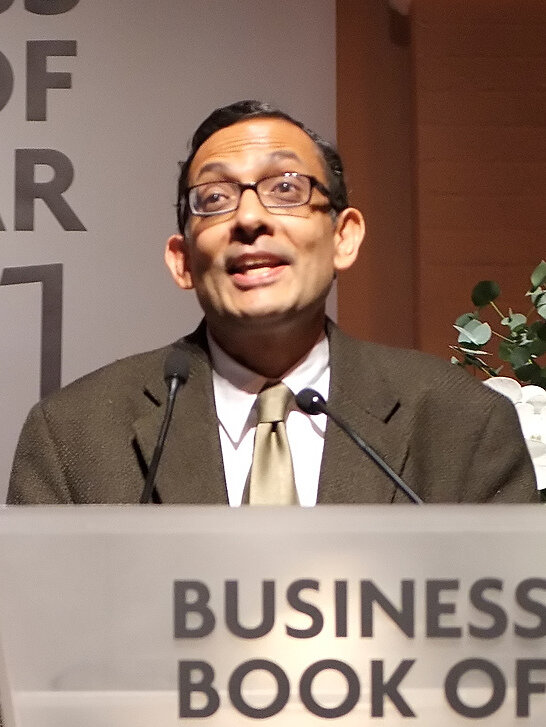
– Agencies
In an interview with PTI, Banerjee said the agreement carries geopolitical significance amid high tariffs imposed by the Donald Trump administration, but warned that without major improvements in efficiency, logistics, and supply chains, its economic impact would remain limited.
“It is certainly a strategic alignment. It sends a signal to the US- from Europe and from India – that we don’t need the US as much as the US thinks we do. That can be useful if the idea is to bring the US to the bargaining table,” Banerjee said, while expressing scepticism about how much leverage the pact would actually create.
According to officials, the agreement will eliminate tariffs on 99% of Indian exports to the EU and reduce duties on more than 97% of EU exports to India, covering nearly a quarter of global GDP. Indian industries such as textiles, apparel, leather goods, handicrafts, footwear, and marine products are expected to benefit, while Europe stands to gain in sectors including wine, automobiles, chemicals, and pharmaceuticals.
Banerjee noted that India has been prioritising sectors such as textiles, leather, and jewellery, but outcomes are likely to vary.
“We are certainly competitive in jewellery and leather, and maybe less so in textiles, though that depends on which kind of textiles,” he said, pointing out that rivals such as Vietnam and Bangladesh “are also competitive and they have had some lead over us”.
He identified logistics and delivery speed as India’s key constraints.
“When I talk to retailers in the US, they say Indians are slow. Our transportation system isn’t efficient, ports are slow -all of these things matter,” said Banerjee, who was in Kolkatal
In the 2024–25 financial year, India’s total merchandise trade with the EU stood at around $136 billion, with exports of about $76 billion and imports worth $60 billion.
Drawing a comparison with China, Banerjee said suppliers there often enjoy an edge due to rapid turnaround times.
“If one country offers the same price but delivers faster, buyers will go with that country,” he said, adding that India must “get the efficiency to the Chinese level” to fully capitalise on trade agreements.
“So, we need to catch up in efficiency. If we reach Chinese levels of efficiency, then I am sure we can translate these agreements into gains. But it’s not automatic,” he said.
The economist also pointed to strained trade ties with Washington, as high US tariffs reaching up to 50% in some cases, including duties linked to India’s purchases of Russian oil, have disrupted global trade flows. India has described these measures as “unfair, unjustified and unreasonable”, reiterating that its energy policy is guided by national interest.
Banerjee said India has yet to fully understand the US stance under President Trump.
“We haven’t understood why Trump has been so anti-India. The US hasn’t really been very interested in bargaining with us,” he said, noting that public claims of imminent agreements were often contradicted later.
“US President Trump sometimes claims he spoke to Prime Minister Modi and they will have an agreement, but it’s unclear whether that’s true, as it is later denied. So, I don’t think we fully understand the problem with the US, or how much this affects bargaining,” he added.
Questioning whether Europe could realistically substitute for the US market, Banerjee said scale remains a critical factor.
“India is a big market, but the US is a gigantic market,” he said, observing that while Europe is strong in luxury goods and machinery, it cannot fully replace the US.
“Europe produces a lot of luxury goods and machinery, but the US is a gigantic market. India is a big market, but not comparable. So, how much geopolitical advantage this gives us is unclear. Right now, both Europe and India are somewhat on the sidelines, trying to do something and see what happens,” he said.
Asked whether the FTA could shield India from global instability and supply-chain disruptions, Banerjee said outcomes would depend on execution.
“That depends entirely on how much India can take advantage of it,” he said, adding, “Tariffs are just one component of price. Reliability of supply chains, transportation efficiency, and delivery timelines- all of these matter. So again, it’s not automatic.”
About The Author
