Astana International Forum 2025: A Call for Multilateralism
By Aditi Bhaduri
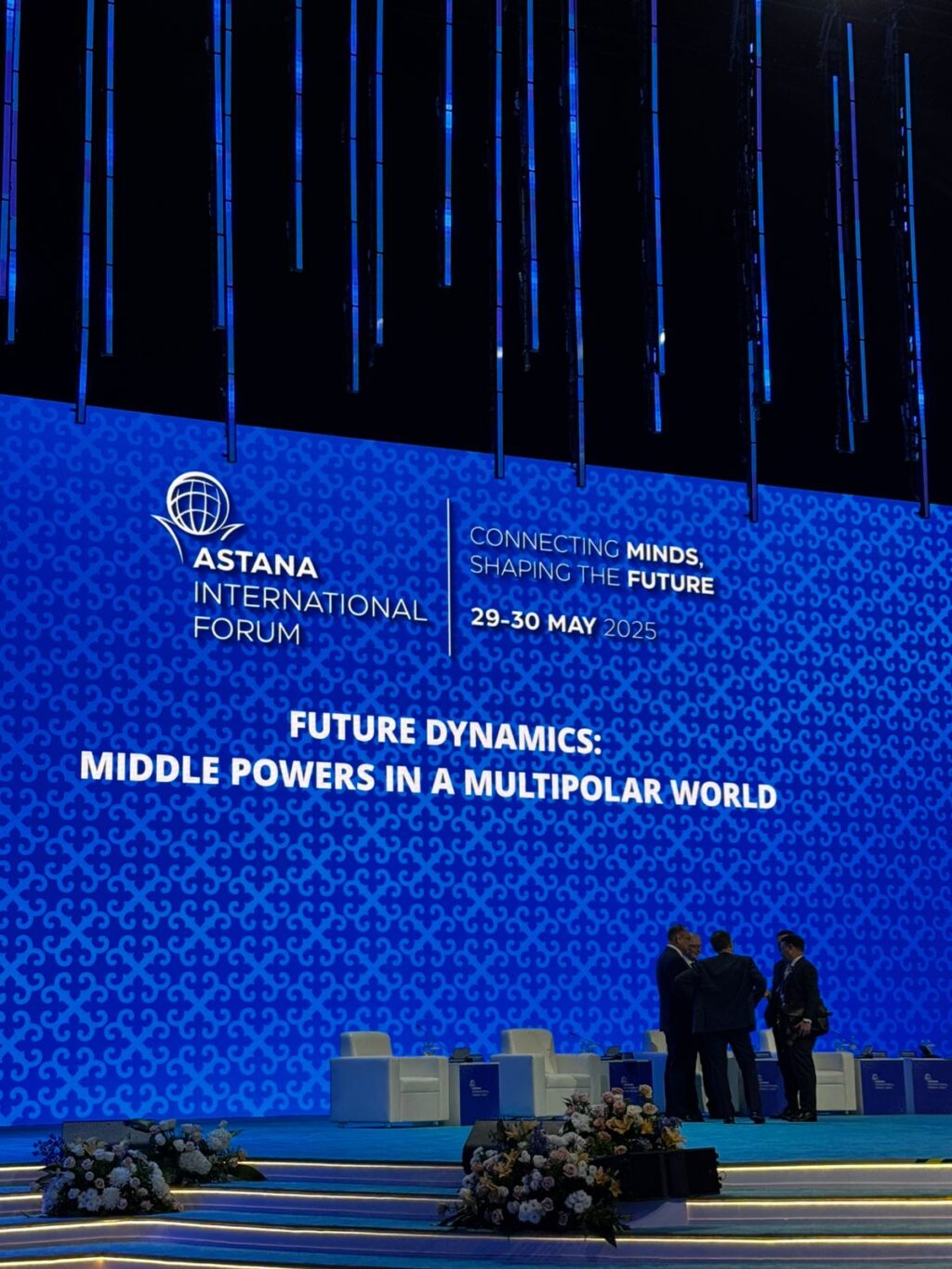
The Astana International Forum opened with a flourish in Astana, the Kazakh capital on 29th May. Kazakhstan is Central Asia’s largest country and a mere less than 3 hours flight away from Delhi. Over two days there was brainstorming and information sharing at the highest level, encompassing a range of issues, as the forum aims to tackle global challenges by amplifying diverse voices.
The theme of the forum this year, which is an annual event hosted by the Kazakhstan Foreign Ministry was “Connecting Minds, Shaping the Future” is both a call and a conviction.
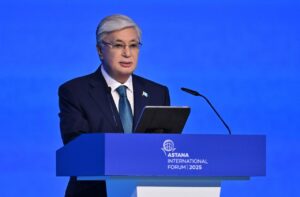
In his opening address, President Tokayev noted the the forum was taking place at a time of great uncertainty in the world. According to last year’s data, 52 countries were involved in armed conflicts. The economic losses from violence reached $19 trillion, approximately 13.5 percent of the world’s gross domestic product.
“Kazakhstan views the modern turbulent world through the prism of constructive cooperation”, said the President. “In our foreign policy, we prioritize dialogue over division and rely on respect for sovereign rights. Disregarding national pride and the historical and cultural traditions of peoples is unacceptable. At the same time, it is essential to respect the right of all national minorities to speak their languages and to develop their cultures. That is why we firmly uphold the ‘Unity in Diversity’ principle in Kazakhstan”.
This is what makes Kazakhstan a significant country to partner with. It is the ninth largest country in the world, equivalent in size to Western Europe (2,724,900 km²), and the largest country in Central Asia. It is resource rich with gas, oil, minerals, and rare earth metals.
Militarily it is also one of the strongest in the region. Yet, Kazakhstan voluntarily gave up it’s nuclear weapons. It has had border problems with a number of its neighbours, including giant China but has been able to solve them. Solving territorial disputes go a long way in enabling development of a nation and society.
However, Kazakhstan is also aware of the increasing fragility of the UN system and the current global order, and that in order to uphold multilateralism and strengthen the UN, reforms are a must. The call from Astana International Forum was loud and clear.
“Kazakhstan supports the expansion of the UN Security Council,”including broader regional representation,” said President Tokayev in his address. “Its structural reform is essential to ensure that the UN remains relevant and truly reflects the world as it is, not as it was,” he added.
About The Author
