U.S. military interventions have led to destruction rather than stabilization in West Asia: Expert
In my opinion, war is inevitable in the near future between Iran, the US, and Israel. It will affect world energy prices and will be a destructive war
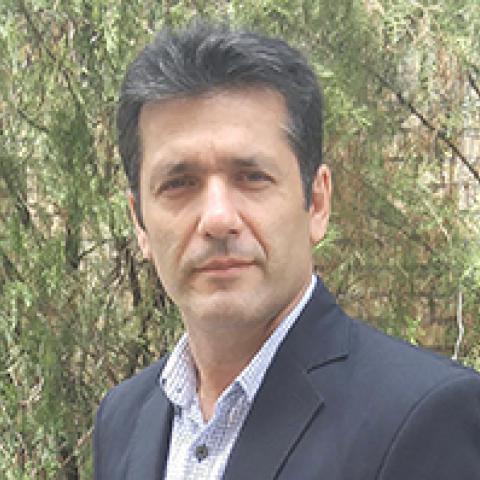
As the year began Iran was shaken by nation-wide protests against the Islamic government. What began as a merchants ‘ protest against price rise and a weakening currency, soon engulfed the entire country in a manner never seen earlier. The threat to the Islamic regime has never been stronger, with countries like the US and Canada calling for a regime change. Meanwhile the country is negotiating with the US over its nuclear program with President Donald Trump threatening military action, while Israel is urgingthe US to intervene military action in Iran. To make sense of shat is happening in Iran IAR’s Mark Kinra spoke to Dr. Ali Omidi, Professor of International Relations, University of Isfahan, Iran.
Excerpts:
Please tell us what happened during the recent protests?
Initially, protests started in late December 2025 in the bazaars and marketplaces. They were protesting the economic depression, high inflation, and the falling of the Iranian currency, the Rial, vis-a-vis the US Dollar, Euro, etc. It began as a peaceful protest, but lately, it became political.
Iranian opposition leaders, especially Reza Pahlavi, the former crown prince, hold a popular place among the Iranian opposition. He called for nationwide protests against the Iranian government. His supporters answered his call, starting nationwide protests and rebellions. They destroyed many places, especially symbols of political Islam such as mosques and seminaries, as well as state governmental organizations including several banks, state administrations, market shops, and public buses.
Do you think the protests were completely organic, or was there infiltration and support by foreign powers?
It turned to violence very quickly, and in my opinion, it was both organic and provoked by foreign agencies such as Mossad and the CIA. They used these protests to infiltrate their agents among the protesters and rebels. I categorize some of the rebels as hooligans; there were many hooligans involved.
They could not be labeled as protesters; they were hooligans. So, it was both political and economic. People are protesting the current situation, especially the economic situation, but they don’t ask about the main cause of the problem. They don’t challenge the fact that it was the U.S. embargo against Iran that created such a dire situation. Anyway, it was a mix of foreign agents, domestic protesters, and hooligans. They all created the situation we saw on January 8th and 9th.
Several reports suggest that thousands of people were killed. What do you have to say about this?
Regarding what happened, there are different statistics. I believe the Iranian government’s statistics: it was around 3,100. Among them were police officers and security agents. Innocent people and passersby were also killed. The Iranian government announced that of this statistic, 600 were terrorists—meaning they were hooligans, destroyers, and foreign agents.
Their aim was not peaceful protest; their aim was to destroy and abuse the people’s peaceful interests. The Iranian government spokeswoman announced that the final number of all people killed will be released very soon. They reject the exaggerated numbers suggesting many thousands, but the figure may change slightly. However, it was less than 5,000 people. Of this number, many are police officers, security agents, and innocent people. Not all of them were innocent protesters.
Iran commemorated the Revolution a few days ago; however, there were reports of anti-government slogans. Do you think the Iranian government has learned any lessons from the protests and is taking proactive steps to solve the issues, especially regarding women and corrective measures?
Yes, Iran commemorated the anniversary of the revolution a few days ago. Massive crowds poured into the streets, chanting pro-government slogans. This year’s demonstrations were very different compared to last year and previous years in terms of the number of participants. The turnout was significantly larger.
This indicates that many people continue to stand by the revolution’s causes and that the Iranian Supreme Leader retains staunch supporters. The demonstrations also served as a reaction to the anti-government protests in January. On the night of Revolution Day, there is a traditional ceremony where people chant “Allahu Akbar,” signifying that God supported them in winning the revolution. It was reported that in some areas, anti-government slogans were heard during that night. However, on the official day of the revolution, there were no anti-government gatherings or slogans reported.
The Iranian government has certainly learned from last month’s protests. However, meaningful reform requires financial resources, and Iran is under severe sanctions, limiting its ability to implement substantial changes. While lessons were drawn, they may be more related to methods of repression. The authorities appear to have learned how to suppress protests swiftly and prevent damage to public assets. In the short term, the state has improved its ability to confront potential future protests. Structural reforms in the political, economic, and cultural spheres require time and resources. For the time being, the state continues to resist fundamental change.
Do you think the US and Israel will force Iran into war, or are there back-channel talks happening for negotiation?
Regarding a potential war between Iran and the US, I think it will happen for certain, sooner or later—maybe even next week. The US President has become more arrogant and self-confident after what happened in Venezuela and elsewhere. They think Iran is similar to Venezuela and that they can succeed through coercive or gunboat diplomacy. If not, they will surely use force.
In my opinion, war is inevitable in the near future between Iran, the US, and Israel. It will affect world energy prices and will be a destructive war. Diplomacy has reached an impasse and will not solve anything because the US demands are illogical. It is impossible for Iranian authorities to accept demands such as stopping the production of long-range missiles or dismantling all enrichment technology. Iran will not give in, and therefore war is inevitable. Iranian authorities believe that the US gesture of diplomacy is just a pretext for war—a way to mislead others into thinking they offered diplomacy but Iran refused.
There are reports that the US and Israel are taking help from Pakistan to supply electronic devices and other materials, and are also propping up Baloch separatists against Iran?
Israeli agents use Baloch separatists as instruments for their political aims. It is highly unlikely that Pakistani authorities are involved in this. Most probably, Mossad has infiltrated the Pakistani Balochistan area and uses Iranian Baloch separatists as a political instrument to make the Iranian Balochistan area unsafe. These separatists want to force Iranian military and security authorities to concentrate on this area and forget other potential areas of insecurity, such as Kurdistan.
How did negotiations at Oman happen? Any update?
The negotiation in Oman was the first meeting following the 12-day war between the United States and Iran. It can be described as an attempt to break the ice rather than a major breakthrough. According to Reuters, the second round of negotiations is expected to take place in Geneva, Europe.
However, there is strong pessimism regarding the possibility of any meaningful breakthrough. Reaching a compromise appears extremely difficult because both parties maintain firm and opposing positions. The US has presented maximalist demands, while Iran insists on maintaining uranium enrichment on its own territory. Iran also refuses to negotiate over its missile program or its regional alliances, including groups such as Hashd al-Shaabi in Iraq, Hezbollah in Syria, and Ansarullah in Yemen. Given these rigid positions, a miracle is required, especially in the era of the Trump administration.
How do common Iranians look at the US threat that Iran should negotiate and never go nuclear? Is Iranian society prepared for war?
War is undesirable for any rational person. Within Iranian society, there is a clear fracture regarding the possibility of war with the US. Some who oppose the government view war as an opportunity for significant internal change and may even hope for it.
At the same time, many others fear war. This division reflects broader fragmentation. Many conservative citizens are concerned that war would disrupt their lives and economic security. The Iranian government appears to be preparing for military confrontation. Iran’s geography is a strategic advantage, and strategists believe it provides the capacity to deter the US. While some perceive war as a form of liberation, there is skepticism; critics argue that past U.S. military interventions have led to destruction rather than stabilization in the region.
About The Author
