From Mountains to Urban Centers: Strategic Shifts in Baloch Militancy Over the Past Year
2 months agoThe most significant operation of the year occurred in March, when the BLA’s Majeed Brigade hijacked the Jaffar Express train, an incident described by observers as unprecedented in modern conflict history
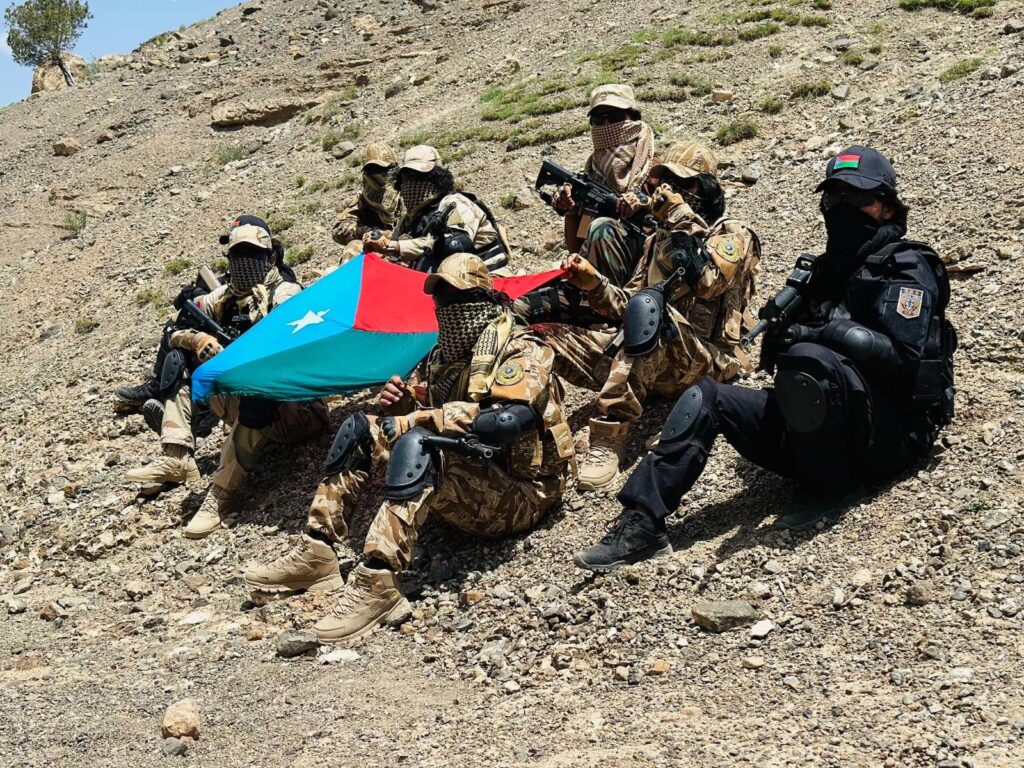
By Bahot Baloch
Balochistan’s conflict environment has undergone a steady transformation over recent years, but 2025 marked a decisive escalation. The year opened with a major attack in its first week and continued at sustained intensity through December. According to official figures, the Pakistani military conducted approximately 78,000 operations across the Balochistan during the year.
Major Attacks and Operational Developments
The Baloch Liberation Army (BLA), widely regarded as the most active and high-impact armed group advocating Baloch independence, launched the year’s first major operation on January 4. In Turbat, the central area of Kech district, a convoy of buses transporting Pakistani military personnel was targeted with an explosive-laden vehicle. The BLA’s Majeed Brigade carried out the attack. One bus was completely destroyed, killing dozens of personnel on board.
Four days later, on January 8, BLA special units, the Special Tactical Operations Squad (STOS) and the Fateh Squad, briefly seized control of Zahri town in Khuzdar district. Fighters took over police stations, the municipal committee, banks, and other government buildings. Checkpoints and defensive positions were established across the town, and public addresses were delivered. Control was maintained for more than ten hours before the fighters withdrew, taking with them a substantial cache of weapons, ammunition, and vehicles.
The most significant operation of the year occurred in March, when the BLA’s Majeed Brigade hijacked the Jaffar Express train, an incident described by observers as unprecedented in modern conflict history, with a passenger train held for four consecutive days. The train was intercepted in the Mashkaf area of Bolan while carrying more than 200 Pakistani military personnel. Civilians were released at the outset, while military personnel were detained, and demands were presented to Pakistani authorities.
The operation formed part of the second phase of “Operation Darra-e-Bolan” and was supported by the STOS, the Fateh Squad, and the BLA’s intelligence wing, known as Zarab.
Rail services across Balochistan remained severely disrupted throughout the year. Following the Jaffar Express hijacking, the train and railway infrastructure were targeted in more than fifteen IED attacks, resulting in a months-long suspension of services. The Baloch Republican Guards claimed responsibility for most of these attacks.
Just four days after the train hijacking, another major assault took place in Nushki, where a convoy of buses transporting Pakistani military personnel was targeted by the BLA’s Majeed Brigade and Fateh Squad. One bus was destroyed in a vehicle-borne explosive attack, while fighters opened direct fire on personnel in another bus. The group claimed that approximately 90 soldiers were killed.
In September, the Majeed Brigade carried out its third major operation of the year in the Dasht area of Kech district. A convoy of military buses traveling from Karachi via Gwadar toward Turbat was again targeted. One bus was destroyed in an explosive attack, while suicide fighters engaged others.
Another significant operation occurred in November, when the Baloch Liberation Front (BLF) launched an assault through its newly formed “Saddo Battalion.” Six suicide fighters targeted the main Pakistani military camp in Nokkundi and maintained control for more than 24 hours.
Beyond these major attacks, Baloch fighters temporarily seized control of several towns and highways at various points during the year. There were also multiple reports of fighters overrunning military camps and police posts, seizing weapons and ammunition. Nearly 200 explosions of various types were recorded. IED attacks killed several Pakistani officers, including four of major rank and multiple captains.
Strategic Shifts and Operational Capacity
The Baloch independence movement has persisted for more than 25 years, but recent developments point to a clear evolution in strategy, one that could push the conflict toward a more decisive phase. Over the past eight years, suicide operations, temporary seizures of military installations, intelligence-led attacks, control of key highways and urban centers, and extensive use of IEDs have emerged as defining features of this shift.
Suicide operations have become the most lethal component of Baloch militant tactics. The BLA’s Majeed Brigade has developed the capacity to carry out multiple high-impact attacks within short timeframes. The unit is supported by the group’s intelligence wing, Zarab, which is believed to maintain detailed intelligence on Pakistani military movements, the locations of senior officers, and the deployment of camouflaged vehicles, from Quetta to Gwadar and Karachi.
Analysts widely attribute Zarab’s intelligence role to several high-profile operations over the past year, including the Jaffar Express hijacking, major attacks on military convoys in Turbat, Nushki, and Dasht, and the killing of two major-rank officers in areas near Nushki and in Quetta.
The BLA has also increasingly emphasized IED warfare. Over the past year alone, the group claimed responsibility for more than fifty IED attacks. Footage released via the BLA’s media outlet, Hakkal, shows multiple explosions that the group says resulted in the deaths of dozens of Pakistani soldiers.
Evolving Weaponry and Tactics
Speaking to the BBC, security analyst Iftikhar Firdous noted that militant groups in Balochistan are now employing a new generation of weaponry.
“Since 2021, we have seen American and NATO weapons fall into the hands of these groups,” he said. “But now we are seeing systems and technologies that were previously very rare among militant organizations.”
According to Firdous, militants are also using IEDs capable of targeting the frequencies of military jamming systems.
“This has contributed to rising casualties,” he said. “These devices undermine conventional protective measures, resulting in higher fatalities among officers and soldiers.”
The Shift Toward Urban Arenas
Baloch armed groups are increasingly pushing the conflict toward urban centers. Over the past year, the BLA temporarily seized control of towns including Zahri, Mangochar, Surab, Mastung, and Panjgur, directly challenging Pakistani security forces. These operations not only increased public visibility but also enabled fighters to acquire weapons and ammunition essential for guerrilla operations.
Fighters have also established temporary roadblocks and conducted operations on major highways in the Dasht area, roughly 40 kilometers from Quetta. Within Quetta itself, at least three incidents were reported in which weapons were seized directly from police personnel.
Conclusion
The evolving strategy and operational posture of Baloch armed groups are likely to intensify the conflict in Balochistan further. Reports indicate a steady flow of new recruits, including graduates from higher education institutions, which could significantly alter the technical and operational dimensions of the insurgency.
Pakistan’s Army Chief, General Asim Munir, has issued rhetoric reminiscent of former military ruler Pervez Musharraf, openly challenging the Baloch population. On the ground, however, the Pakistani military faces mounting operational pressure. In towns such as Zahri, heavy artillery and tanks have been deployed, while airstrikes were carried out in Bolan. Drone operations have also been reported across the Balochistan. These developments suggest that the conflict has moved beyond a low-intensity phase and now increasingly resembles a full-scale war.
Over the past year, Baloch armed groups executed numerous operations through coordinated planning and tactical adaptation. Thousands of actions of varying scale were reported overall. At the same time, the groups have also suffered significant casualties. As the pace of the conflict accelerates, losses on all sides are expected to rise, highlighting the increasing risks and complexity of a war that shows no immediate signs of de-escalation.
The author is a journalist who closely monitors current affairs in Balochistan, with a particular focus on Baloch pro-independence organizations.
Views are personal and IAR neither endorses nor is responsible for them.
