Pakistan’s intimidation only strengthens our resolve for Balochistan: Nazir Noor Baloch, Baloch National Movement
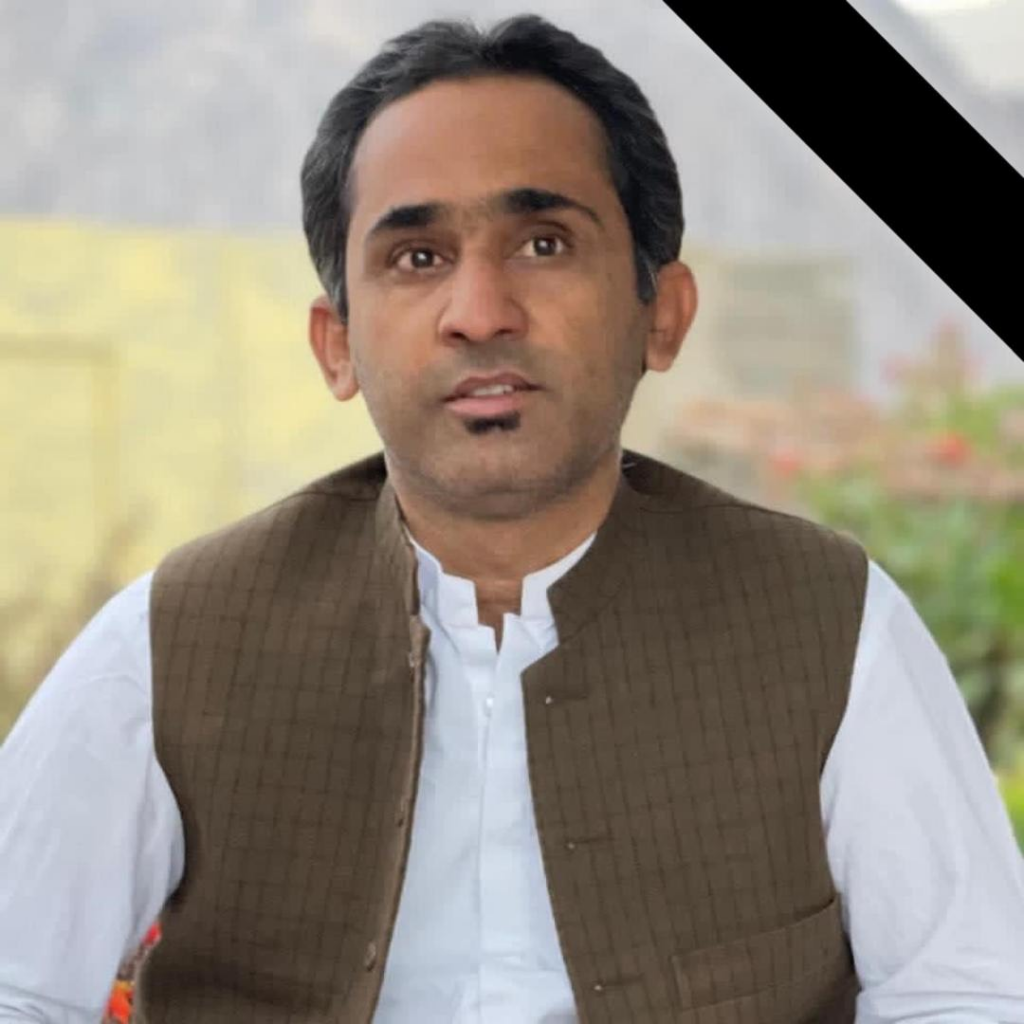
By Mark Kinra
Pakistan’s record on human rights is one of the worst in the world. However, rather than being called out, much of the international community has turned a blind eye to it. To find out why, IAR’s Mark Kinra spoke to Nazir Noor Baloch, a student leader and human rights advocate on human rights issues in Balochistan and why Pakistan is getting a free pass.
Excerpts:
Please tell us about yourself and your work?
I am Nazir Noor Baloch, a political activist and writer associated with the Baloch National Movement. Since April 2022, I have been serving as the Head of the Human Rights Department at Paank, where my work focuses on documenting human rights violations and advocating for accountability in Balochistan. Previously, I served as Chairman of the Baloch Students Organization–Azad from 2018 to 2020.
My activism and writing are centered on the political, human, and national rights of the Baloch people, with particular emphasis on Balochistan’s historical and ongoing conflicts. Over the years, I have been actively engaged in political organizing, policy analysis, and public discourse on critical issues such as enforced disappearances, resource exploitation, militarization, and the denial of democratic rights.
I regularly write and speak on these subjects to raise awareness at both regional and international levels. My work also involves engagement with journalists, researchers, and human rights organizations to help present an accurate and informed picture of the situation in Balochistan. I believe that sustained intellectual engagement, political clarity, and international advocacy are essential to achieving a just and peaceful resolution to the Baloch question.
At the core of my work is a commitment to self-respect, dignity, and political empowerment for the Baloch people. I continue to contribute through writing, analysis, and political engagement toward these goals.
How grim is the situation of human rights in Balochistan and can you highlight some major issues?
The human rights situation in Balochistan in 2025 is alarming and continues to deteriorate. Between January and June alone, 785 cases of enforced disappearances have been documented, involving students, political activists, and ordinary civilians taken without warrants or due process. Many remain missing, while families are denied information, justice, or legal remedies.
During the same period, 121 cases of extrajudicial killings were recorded, often following enforced disappearances. Victims are frequently found dead bearing signs of torture, highlighting a complete breakdown of the rule of law and entrenched impunity.
The expansion of security laws has further normalized arbitrary detention, while peaceful protests, human rights documentation, and dissent are met with arrests, intimidation, and internet shutdowns. Human rights defenders and civil society groups are increasingly targeted to silence reporting from the ground.
Militarized operations, curfews, and communication blackouts have disrupted daily life, cutting communities off from basic services and livelihoods. The cumulative impact is widespread fear, psychological trauma, and the systematic denial of fundamental rights.
These are not isolated incidents — they reflect a sustained and systemic human rights crisis that demands urgent national and international attention.
Why do you think Europe, which is considered as vanguard of human rights, doesn’t call out Pakistan’s abuses or talks about it’s GSP+ status and link it to human rights in order to trade with Europe?
Europe proudly presents itself as the global vanguard of human rights, democracy, and the rule of law. Its treaties, institutions, and public discourse are saturated with moral language. Yet when it comes to Pakistan where enforced disappearances, extrajudicial killings, censorship, religious persecution, and collective punishment are well documented, Europe’s voice becomes conspicuously muted. This silence is not accidental; it is political.
At the heart of this contradiction lies Europe’s strategic and economic self-interest, most visibly reflected in Pakistan’s continued access to the EU’s GSP+ trade status. In theory, GSP+ is conditional: beneficiary countries must uphold international conventions on human rights, labor rights, environmental protection, and good governance. In practice, Pakistan’s persistent violations have not led to meaningful consequences. This exposes GSP+ not as a principled mechanism, but as a flexible tool shaped by geopolitics.
Europe knows exactly what is happening in Pakistan. Reports from the UN, international NGOs, journalists, and local human rights defenders paint a consistent and grim picture. The issue is not lack of information; it is lack of political will. Calling out Pakistan would require Europe to move beyond rhetoric and confront uncomfortable truths about its own double standards.
Pakistan is seen by European policymakers primarily through a security and stability lens. It is treated as a ‘necessary partner’ in a volatile region bordering Afghanistan, linked to migration routes, and positioned within broader power contests involving China, the US, and the Gulf. Human rights, in this framework, become negotiable. As long as Pakistan is perceived as useful in managing refugees, counterterrorism narratives, and regional diplomacy, its abuses are tolerated.
Economic interests further reinforce this silence. European industries benefit from cheap Pakistani labor and exports under GSP+. Millions of euros flow into European markets while Pakistani workers often women and minorities remain trapped in exploitative conditions. To seriously enforce human rights conditionality would risk disrupting supply chains and profits. Europe’s moral language collapses when it threatens material comfort.
There is also a deeper, more uncomfortable reality: Europe applies human rights selectively. It speaks loudly where condemnation is easy and politically safe, and quietly where accountability would be costly. This selectivity erodes Europe’s credibility, especially among communities who experience repression firsthand and look to Europe as a beacon of justice.
By refusing to meaningfully link Pakistan’s GSP+ status to human rights performance, Europe sends a dangerous message: that some lives matter less, that some victims are acceptable collateral, and that principles can be postponed indefinitely. This is not pragmatism; it is complicity.
If Europe truly wishes to lead on human rights, it must begin by aligning its actions with its values. That means transparent reviews of GSP+ compliance, public engagement with Pakistani civil society, protection for human rights defenders, and a willingness to impose consequences—not symbolic statements when red lines are crossed.
Human rights cannot be a branding exercise. They must be a commitment. Until Europe confronts its own hypocrisy, its claim to moral leadership will remain hollow to those suffering under regimes it chooses not to challenge.
What are the challenges that you and your team face on daily basis in order to collect data, report on human rights or to highlight it etc. ?
On a daily basis, my team and I face serious and layered challenges in collecting data, documenting cases, and reporting on human rights violations in Balochistan.
Many areas are heavily militarized. Our activists and local contacts are often denied access, monitored, or intimidated, making on-ground verification extremely difficult. [There are] threats, harassment, and reprisals. Human rights defenders, victims’ families, and even witnesses face threats, enforced disappearances, and harassment. This creates fear and silence, and many people are afraid to speak openly.
There is lack of official data and transparency: state institutions do not provide credible or transparent data. There is no access to official records regarding enforced disappearances, extrajudicial killings, or arbitrary detentions, forcing us to rely on community-based documentation.
Communication blackouts and surveillance, internet shutdowns, poor connectivity, and surveillance of phone calls and digital platforms severely disrupt timely reporting and put our sources at risk.
Victims’ families are traumatized and fearful. Verifying cases ethically—without exposing them to further harm requires time, trust, and caution, which slows documentation.
Pakistan’s criminalization of human rights work:
Our work is often labeled as ‘anti-state’ or ‘propaganda’. This delegitimization restricts civic space and makes engagement with national institutions almost impossible.
Balochistan remains underreported globally. Despite the scale of abuses, attracting sustained international media and institutional attention is a constant struggle.
Continuous exposure to violence, grief, and threats takes a heavy mental and emotional toll on our team, many of whom are themselves from affected communities.
Despite these challenges, we continue our work because documenting the truth and amplifying the voices of victims is essential. Silence only deepens injustice, and our struggle is to ensure that the human rights situation in Balochistan is neither erased nor forgotten.
Has Pakistan ever threatened you or your colleagues or do you feel any pressure from Pakistan?
My team members and party colleagues continue to face pressure. There have been attempts to intimidate and silence us. Even in Europe, they experience harassment, surveillance, and threats intended to discourage our human rights work. These tactics have not deterred us; instead, they strengthen our resolve to speak for the victims and continue our peaceful struggle.
About The Author
