“India’s BRICS leadership can offer a forum to stabilize ties with China”
India and China are currently in the process of normalising relations, which had recieved a serious set-back following the 2020 Galwan clashes. The momentum was set with the visit of Prime Minister Narendra Modi to Tianjin in 2025 to attend the Shanghai Cooperation Organisation summit. The 35th meeting of the Working Mechanism for Consultation and Coordination on India-China Border Affairs (WMCC) was held in Beijing on Wednesday (May 27, 2026) where both sides held constructive and forward-looking discussions on border delimitation and boundary management issues.
Currently Chinese Foreign Minister Wang Yi is in India to attend on the BRICS National Security Advisers’ meeting in New Delhi. On the sidelines he met India’s National Security Adviser Ajit Doval. India’s foreign ministry described the talks between Doval and Wang as “constructive and forward-looking”. President Xi Jinping is expected in Delhi in September to attend the BRICS summit where India is chairing this year.
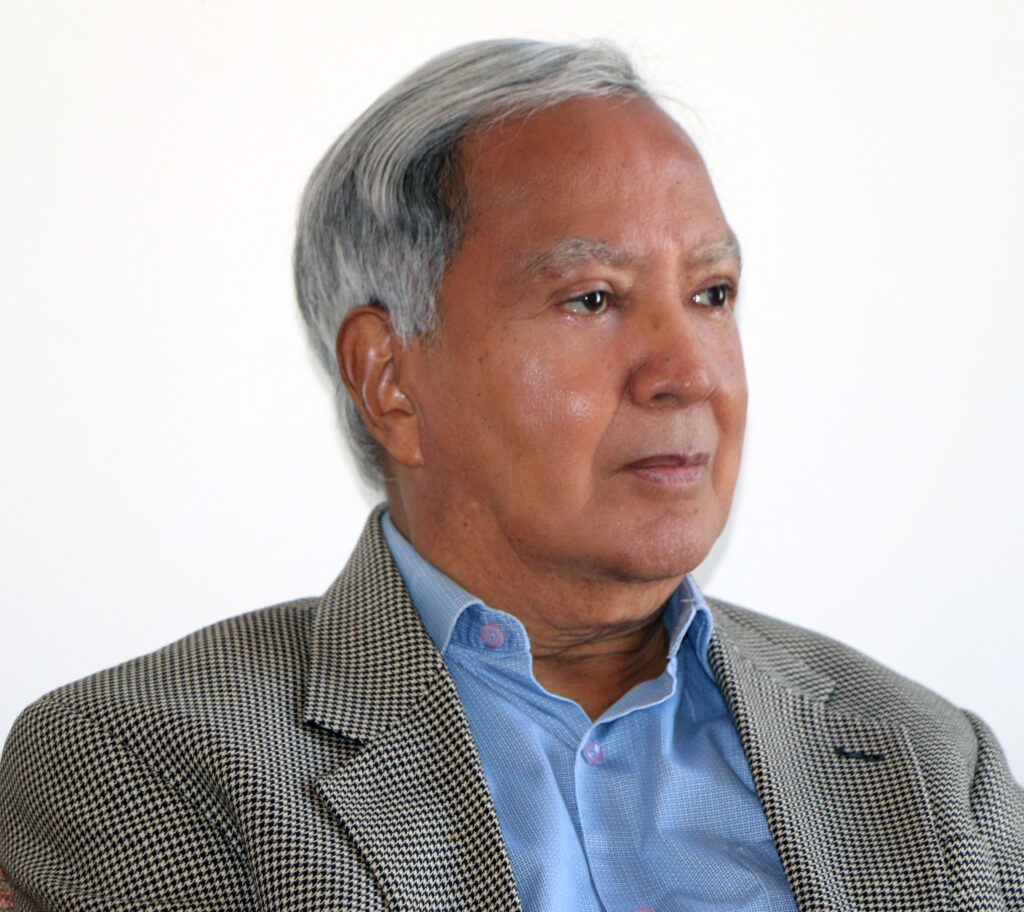
To understand where India -China bilateral relations stand today and how they can be taken forward, Aditi Bhaduri spoke to Krishnan Srinivasan, former Foreign Secretary at India ‘s Ministry of External Affairs.
Excerpts:
India and China seem to be hitting the reset button in bilateral ties. How would you evaluate this?
I view this development very positively. It has been inordinately delayed and it is a pity it seems to have been propelled by Delhi’s misgivings about the USA, both in terms of its foreign and trade policies, rather than for the sake of India and Asia.
Let us recall that Nehru said that India and China together could make this an era for Asia, and Lee Kuan Yew said that India and China were like two wings of a bird that could make Asia fly.
The desirability of good relations with China, a major Asian and world economy and influence, should speak for itself, quite apart from external considerations.
Even now there seems to be a great deal of Indian hesitation, resulting in one step forward and one back which is not only confusing but reveals a lack of clarity and determination in Delhi.
To cite just a few examples: India is still not granting visas easily to Chinese visitors, which is why the Chinese mission could not have a dignitary in Kolkata for their film festival in April. Non-issues like the Chinese naming of parts of India are blown out of proportion.
This inherited attitude towards China causes great imbalance.
What, if anything, do you think will change in India-China relations because of the current West Asia crisis?
India could have made common cause with China on a host of issues arising from the Iran war, but was restrained by Delhi’s affinity with the USA and Israel, though it openly expresses support for Gulf rulers against Iran’s strikes in retaliation for the US/Israel illegal aggression.
China is more forthright but has fallen short, at least openly, in providing military support to Iran though it is a major buyer of Iranian crude, from which it derives 14% of its oil, or in condemning USA.
China is believed to have played a part in bringing USA and Iran to negotiations at Islamabad in April and Iran is happy to have China, along with a few other nations, play guarantor for any future peace agreement.
India is not a party in these discussions and is basically missing in action.
Both India and China have greater interest in GCC than in Iran. GCC supplies 42% and 31% of China’s crude and LNG. China’s trade with Saudi Arabia and UAE exceeds $100bn annually each compared to $15bn with Iran.
Iran has sought deeper strategic alignment with China, which has limited this in preference for relations with other Middle East partners. China has successfully avoided choosing sides while extracting strategic value from the conflict: intelligence on US military capabilities, diplomatic visibility, and continued access to Iranian oil.
There is little or no likelihood of the Iran war or possible further US-Iran negotiations under Pakistan’s auspices having any direct impact on India-China relations in the near term.
India has eased rules to allow Chinese investments to enter India. Some have urged caution. What is your take on that?
The same stop-go attitude of India towards China is seen in this issue, which strains credibility. Seen objectively, the figures are stark: India-China trade is at $120 bn imports and $18 bn exports; investment by China in India a total of $2.7 bn which is a miniscule 0.3% of the total inward investment. And this at a time when India is crying out for investment in manufacturing, export-oriented industries and technology.
Investment by neighbours (eg China) requires prior government permission. This is now promised within two months. Lately 10% Chinese ownership is also permitted. These are hardly great inducement for a nation that has invested $162 bn abroad, mainly in infrastructure and energy.
India should note that China spent 1.7 to 2% of GDP over three decades to support industry and ensure competitiveness. India should learn from this; however it still prizes protection over exports when it should play to its labour strength and build scale in assembly before chasing self-reliance.
There is no effort to attract Chinese tourists (which number more than 100 million a year) to India. Chinese business people still face difficulties in obtaining Indian visas.
India is holding the chairmanship of BRICS this year. How can it use this opportunity to improve bilateral relations with China?
India has a basic problem in BRICS. Of the five original and leading members (Brazil, Russia, India, China, South Africa) before recent expansion, only India has a tolerant, perhaps supportive, attitude towards the US and dollar denominated trade. This puts it in considerable difficulty at the upcoming BRICS summit this year at Delhi.
India has an opportunity as the 2026 BRICS chair to further normalise relations with China, following a progressive thaw in ties initiated by the 2024 Modi-Xi meeting in Kazan, Russia. Both nations are engaging in diplomatic dialogue; China has signalled support for India’s presidency, suggesting enhanced cooperation and normalization of relations even as border challenges persist.
However, BRICS members which include Russia, China and Iran, are likely to have widely divergent views from India on US and Israel’s aggression against Iran.
There are some opportunities to Improve relations with China via BRICS: As BRICS 2026 chair, India will host the BRICS Summit and various meetings covering trade, technology, and security, creating a structured environment for diplomatic engagement.
India and China are focused on stabilization, with high-level officials highlighting that the strengthening of coordination within BRICS can foster better ties.
Both nations share common interests in strengthening multilateralism, promoting a multipolar world, and improving economic cooperation, which can serve as a foundation to manage their bilateral friction points, eg.the Line of Actual Control (LAC).
But there are challenges. While diplomatic engagement is increasing, the unresolved border tensions along the LAC remain a major challenge.
India’s involvement in the Quad, a group designed to counter Chinese influence, contrasts with China’s goals in BRICS, creating a complex relationship where cooperation and competition co-exist.
The success of this approach relies on whether the two nations can align their interests, transforming their “partly convergent and partly divergent” relationship into a more stable partnership.
In conclusion, India’s BRICS leadership can offer a forum to stabilize ties with China, provided India shows strategic flexibility and utilizes multilateral cooperation to manage bilateral disputes.
About The Author
